
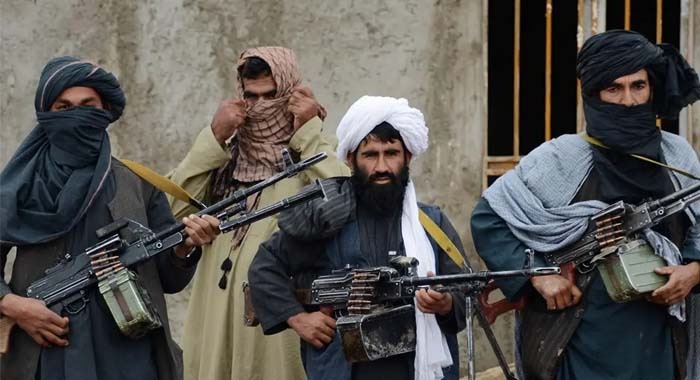
The question of militant sanctuaries inside Afghanistan has steadily shifted from diplomatic allegation to documented security concern. What once revolved primarily around the banned Tehreek-e-Taliban Pakistan (TTP) has now widened into a layered ecosystem hosting regional and transnational actors.
United Nations monitoring reports continue to flag the presence of multiple groups operating within Afghan territory. Among them are the Eastern Turkistan Islamic Movement (ETIM) and the Turkistan Islamic Party (TIP), both maintaining operational footprints in eastern Afghanistan. Al Qaeda in the Indian Subcontinent (AQIS) also retains facilitation networks, embedded within local militant and tribal structures.
Mobility as Strategy
Unlike conventional insurgent sanctuaries of the past, the current militant geography is fluid rather than fixed. In addition to the global terror groups, like Al-Qaeda, BLA and TTP commanders, including Mufti Noor Wali Mehsud and Hafiz Gul Bahadur, move across Kunar, Khost, Paktika, and Paktia, maintaining logistical depth while enabling operational reach into Pakistan’s tribal districts.
The Previous Read: Sanctuaries Beyond Decree: Militant Ecosystem Inside Afghanistan Limits Taliban Enforcement Reach
This mobility has created an informal militant corridor where fighters, facilitators, and reconnaissance cells operate with relative freedom, blending into local populations. The result is a sanctuary model that is decentralized, adaptive, and harder to neutralize.
Converging Threat Vectors
The presence of Islamic State-Khorasan Province (ISKP) further complicates the security matrix. Though ideologically distinct from Taliban-aligned factions, ISKP exploits the same ungoverned or loosely governed spaces, recruiting disaffected fighters and staging high-visibility attacks.
Rather than operating in isolation, these groups intersect through facilitation networks:
Shared smuggling routes
Weapons transfers
Training exchanges
Intelligence sharing
This convergence amplifies operational resilience. Even when one group faces kinetic pressure, others absorb, shelter, or reconstitute the threat.
Financing the Insurgency
Funding streams sustaining this ecosystem are equally diversified. Security officials cite:
Illegal mining revenues
Narcotics trafficking
Cross-border extortion
Arms black markets
These channels ensure militant groups retain procurement capacity, enabling access to advanced weaponry, surveillance drones, and communications technology.
Strategic Consequence
The persistence of such sanctuaries transforms Afghanistan from a national security concern into a regional destabilization platform. Cross-border attacks, recruitment pipelines, and ideological exports all stem from this permissive environment.
Enforcement decrees, counterterror assurances, or relocation pledges face structural limits. Militancy here is no longer a singular entity but an interconnected ecosystem, resilient by design and transnational in consequence.



