The unfolding situation in Tirah Valley is not merely a security operation or a temporary displacement crisis. It represents a convergence of weak governance, political ambiguity, and institutional failure that threatens both humanitarian stability and counter-terrorism objectives in Khyber Pakhtunkhwa.
Tirah occupies a uniquely sensitive position. Bordering Afghanistan and historically serving as a strategic corridor, the valley has long been vulnerable to militant spillover, smuggling networks, and cross-border movement. Any security intervention in such terrain requires not only military precision but also swift, competent civilian administration. The present crisis demonstrates how the absence of the latter can undermine the former.
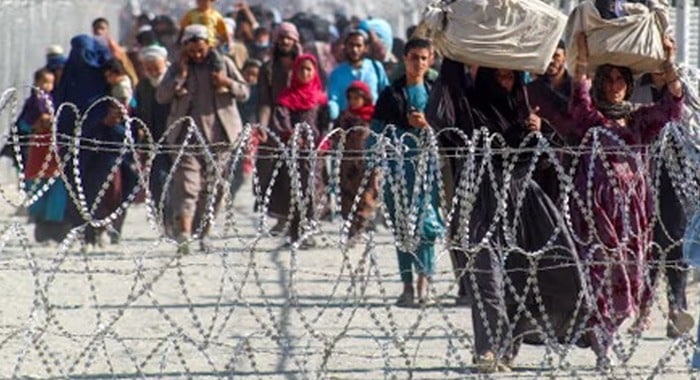
The evacuation delays are not incidental. When families require four to five days to traverse a route that ordinarily takes hours, the issue ceases to be logistical and becomes structural. Transportation, registration, shelter, and healthcare are core provincial responsibilities under the post-18th Amendment framework. Failure in these domains directly slows security operations, prolongs civilian suffering, and creates exploitable gaps.
The acknowledgment by a former senior police officer that the Pakistan Army is filling administrative vacuums is revealing. While the army’s involvement mitigates immediate suffering, it also highlights a dangerous precedent where civilian institutions abdicate responsibility during crises. Over time, this weakens governance norms and blurs institutional boundaries.
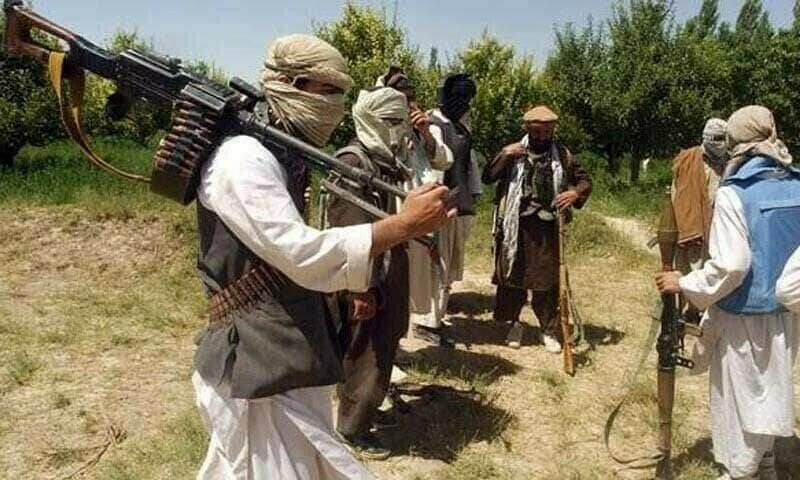
More troubling is the reported breakdown of checks and balances. Weak registration oversight enabling false claims, congestion, and disorder creates precisely the kind of chaos that criminal and militant networks exploit. Allegations of narcotics smuggling under the cover of displacement underscore how governance failure can transform humanitarian corridors into illicit supply routes.
The political dimension compounds these risks. Public confrontation with security institutions, rather than coordination, sends conflicting signals at a time when clarity and unity are essential. Counter-terrorism efforts rely heavily on synchronization between federal authorities, provincial administrations, and the military. When provincial governance appears indecisive or adversarial, it erodes trust and operational coherence.
The Tirah case also illustrates a broader pattern seen across merged districts. Administrative transition post-merger was meant to strengthen civilian rule and service delivery. Instead, persistent capacity gaps, politicization, and delayed reforms have left these regions exposed to recurring crises.
At its core, the issue is not displacement alone, nor even militancy alone. It is the failure to treat governance as a security imperative. Roads, registration desks, medical units, and district officers are as critical to counterterrorism as patrols and checkpoints. When these civilian pillars collapse, military gains become harder to sustain.
The allegations raised by the former DIG resonate because they align with observable outcomes: delayed evacuations, unmanaged crowds, exploitation by smugglers, and prolonged operational timelines. Whether framed as incompetence or facilitation, the impact remains the same. It weakens the state’s response to militancy and deepens public mistrust.
For Tirah and similar regions, restoring peace requires more than operations. It demands accountable governance, functional administration, and political clarity that places public safety above partisan narratives. Without that shift, each crisis risks repeating the same cycle of displacement, delay, and disorder, with consequences that extend far beyond the valley itself.