
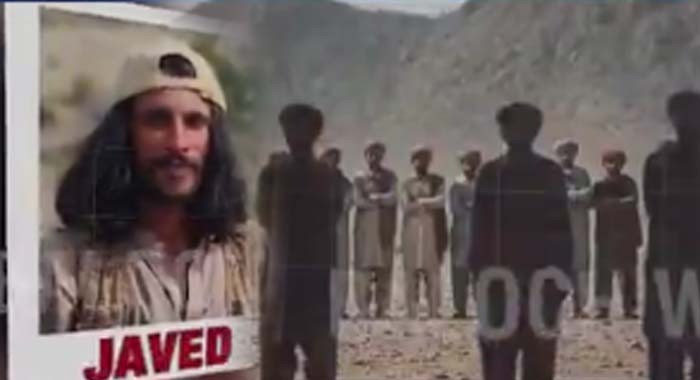
A commander of the banned Balochistan Liberation Army (BLA), identified as Javed Phaliya, was killed during a security forces operation, bringing to an end his long involvement in criminal activity and militancy.
Security officials said Javed Phaliya was a key figure behind the Kharan bank robbery and had been actively involved in multiple serious crimes before formally joining the outlawed militant organization. According to officials, the operation was intelligence-based and successfully neutralised the militant without civilian casualties.
Sources revealed that Javed had a criminal history dating back to his youth. He was repeatedly arrested for various offences and was known to be involved in moral and social crimes. Despite several opportunities for reform, he consistently chose criminal pathways.
Following a particularly grave crime that resulted in the death of a minor child, Javed went into hiding to evade police arrest. It was during this period that he fled to the mountainous areas and joined the banned BLA, an organization the State of Pakistan has designated as Fitna al-Hindustan due to its links with Indian proxy networks.
Security sources further stated that Javed became part of a broader militant network responsible for radicalizing and psychologically conditioning young people for violent activities, including suicide attacks. This network systematically targeted vulnerable youth through coercion, intimidation, and blackmail.
Officials highlighted that banned outfits such as the BLA and BLF have increasingly relied on women and teenagers aged between 17 and 19 in suicide attacks, as these groups are considered easier to manipulate and exploit.
It’s worthy to mention that another high-profile commander of the banned BLA, known as “Shankar Raj,” alias Zohair, was eliminated yesterday in a swift and decisive counter-terrorism operation. According to security sources, the eliminated militant was the chief architect behind the recent attempted bank robbery in Kharan, an operation that was foiled by security forces only days earlier. During that encounter, more than a dozen terrorists were killed on the spot, preventing what could have been a major act of terror and financial crime.
The individual’s real name was Zohair; however, he had adopted the alias “Shankar Raj,” reportedly inspired by a Bollywood character, as part of his effort to cultivate a fearsome persona within criminal and militant circles. Over time, he emerged as one of the most brutal and active operatives of the BLA, with a long history of involvement in terrorism, narcotics trafficking, and organized crime.
Security officials state that Zohair was not merely a narcotics trafficker but also a habitual user of crystal methamphetamine, which he reportedly consumed in a manner intended to accelerate absorption into the bloodstream. This behavior was viewed by investigators as reflective of the extreme violence, recklessness, and lack of restraint that characterized his operational conduct.
In the Kharan district, the militant was linked to numerous acts of terror that targeted both civilians and state institutions. He was reportedly wanted in connection with 21 murder cases and faced serious allegations involving the sexual assault of 17 Baloch women, crimes that deeply traumatized local communities and fueled fear across the region.
Military and security officials emphasized that this operation reflects the Pakistan Army’s unwavering commitment to safeguarding the lives, dignity, and property of citizens. The elimination of such a high-value target is expected to significantly disrupt terrorist logistics, financing, and command structures in the area.
Security officials stressed that the operation sends a clear message: crime, violence, and militancy lead only to failure, disgrace, and an inevitable end. They reaffirmed their commitment to eliminating terrorist networks and ensuring that Balochistan’s future remains tied to peace, rule of law, and development.



