
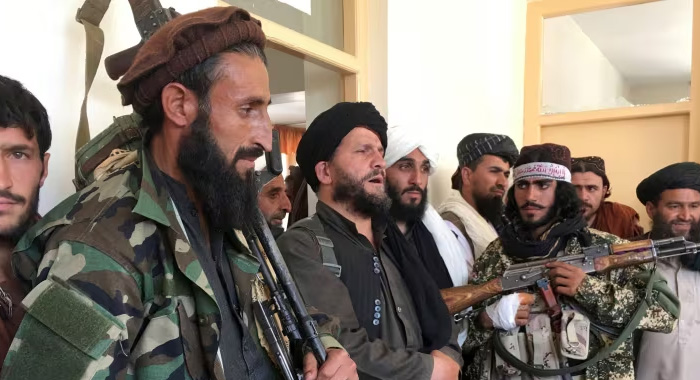
Afghanistan under Taliban rule is witnessing an aggressive ideological and administrative purge led by the group’s supreme leader, Mullah Hibatullah Akhundzada, further darkening the country’s international image and raising alarm over its future as a viable state.
According to credible sources, the Taliban leadership has dismissed 1,136 government employees appointed under the previous administration and replaced them with 1,555 Taliban loyalists across key state institutions. The move underscores a deliberate effort to dismantle professional governance structures and replace them with a system rooted in blind loyalty rather than competence or merit.
Shortly after seizing power in January 2022, Hibatullah Akhundzada rolled out an expansive policy aimed at reshaping Afghanistan’s political, administrative, and intellectual foundations. This policy has resulted in the systematic takeover of state institutions, effectively eliminating independent voices and consolidating unchecked authority in the hands of the Taliban leadership.
One of the most damaging aspects of this purge has been the radical overhaul of Afghanistan’s education system, including at Kabul University. Academic curricula have been rewritten to conform strictly to the Taliban’s rigid ideology and an extreme interpretation of conservative Pashtun customs. Modern sciences, social sciences, and critical disciplines have been removed or sharply curtailed, stripping educational institutions of intellectual diversity and global relevance.
Analysts warn that these measures are designed to eradicate critical thinking, suppress dissent, and indoctrinate future generations, ensuring long-term Taliban dominance over Afghan society. The systematic exclusion of modern education and professional expertise threatens to leave Afghanistan increasingly isolated, intellectually stagnant, and economically uncompetitive.
This restructuring reflects a broader strategy to transform Afghanistan from a functional state into an ideologically policed entity, governed by dogma, fear, and allegiance rather than rule of law, inclusivity, or international norms. The replacement of skilled professionals with ideological loyalists has already weakened state capacity and deepened institutional decay.
The ongoing purge has intensified international concern, reinforcing perceptions of Afghanistan as a country sliding deeper into repression, isolation, and authoritarianism under Taliban rule. Human rights advocates and policy observers warn that without meaningful reform, the Taliban’s hardline governance will continue to push Afghanistan further away from stability, development, and global engagement.



