
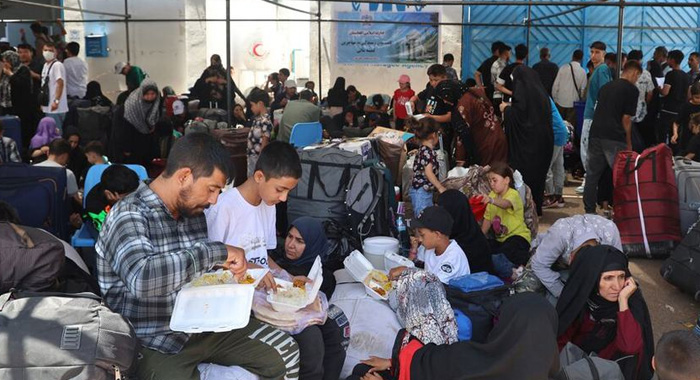
More than 5.2 million Afghan nationals returned to Afghanistan from neighbouring Iran and Pakistan between January and the end of November 2025, including over 1.3 million deportees, marking one of the largest population movements in the country’s recent history and placing immense pressure on an already fragile humanitarian situation, the International Federation of Red Cross and Red Crescent Societies (IFRC) said in a new report.
According to data compiled by humanitarian partners and the International Organization for Migration (IOM), over 3.6 million individuals returned from Iran, including approximately 1.2 million forcibly deported, while 804,830 people returned from Pakistan. Of those returning from Pakistan, 116,100 individuals around 14 percent were forcibly removed.
Humanitarian agencies noted that returns increased sharply after April 1, coinciding with stricter enforcement measures in both countries. The scale and persistence of movements have remained unusually high despite harsh winter conditions that typically limit cross-border travel, particularly along Iran’s border. Aid organizations warned that policy pressure and protection concerns are outweighing seasonal constraints, pushing vulnerable families to return under increasingly difficult circumstances.
In Pakistan, the second phase of the Illegal Foreigners Repatriation Plan (IFRP) began in April 2025, initially targeting undocumented Afghans and holders of Afghan Citizen Cards (ACC). On July 31, authorities expanded the plan to include Proof of Registration (PoR) card holders, significantly heightening uncertainty for Afghan refugees and migrants.
The expiration of a government grace period at the end of August further intensified fears of deportation. Despite repeated warnings from humanitarian organizations about serious protection risks, returns continued at a steady pace.
The Afghan Red Crescent Society (ARCS) reported that the highest daily influx of returnees from Pakistan was recorded in November 2025. Most individuals crossed through official border points at Torkham in Nangarhar province and Spin Boldak in Kandahar, with smaller numbers arriving via Angur Ada in Paktika and informal routes in Helmand.
Returns from Iran accounted for nearly two-thirds of all Afghan returnees in 2025 and remained consistently high throughout the year. Aid agencies attributed this trend to stricter enforcement measures, economic pressures, and broader political factors.
Large numbers of returnees crossed through major border points such as Islam Qala in Herat and Milak–Zaranj in Nimroz, often arriving with minimal possessions and limited resources. The peak occurred mid-year, driven in part by the expiry of temporary residency arrangements and intensified policing, with tens of thousands reportedly crossing daily during earlier phases.
Although daily crossings declined after the mid-year peak, returns continued at scale into late 2025, placing severe strain on reception facilities, humanitarian services, and host communities.
In Tajikistan, borders remain open only to Afghan nationals holding valid passports and visas. However, humanitarian organizations have reported ongoing arbitrary deportations, including of recognised refugees and asylum-seekers, raising serious concerns about violations of international protection standards and increasing anxiety within Afghan communities.
Aid agencies warned that Afghanistan is ill-equipped to absorb the massive influx, as the country continues to face widespread poverty, food insecurity, limited access to healthcare, shelter shortages, and high unemployment. Women, children, unaccompanied minors, and individuals with specific protection needs are among those most at risk.
Humanitarian organizations have urgently called for increased international funding, stronger protection safeguards, and sustained support for reintegration efforts. Without adequate assistance, they cautioned, continued large-scale returns risk deepening instability, worsening humanitarian conditions, and triggering further displacement both within and beyond Afghanistan.
The IFRC emphasized that coordinated international action is critical to ensure returning Afghans are treated with dignity, protected from harm, and supported in rebuilding their lives amid one of the world’s most complex humanitarian crises.



