
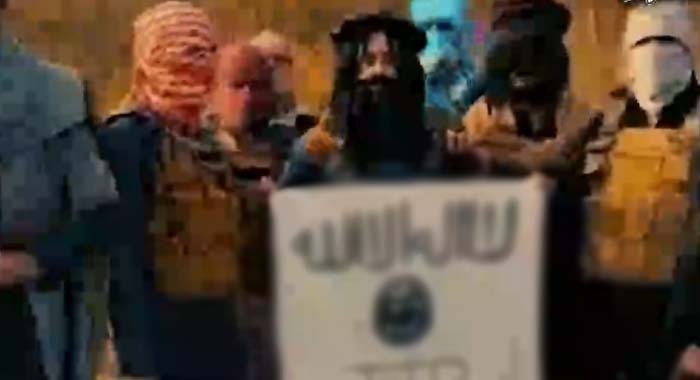
“I am Jalal, and those standing with me are my mujahideen. Two days ago, our shura made certain decisions. Some commanders were given positions, including Zarshad, Mansoor, Qari and Osama, along with others. These appointments were made during the shura meeting.
But all of these amirs belong to the banned Hafiz Gul Bahadur group. Every one of these people from the banned Hafiz Gul Bahadur group is an agent, informer, and spy of this impure and apostate army. Therefore, our message to the senior members of the shura is clear: all these appointments must be withdrawn immediately. If they are not withdrawn, then we know how to deal with Hafiz Gul Bahadur group, and we know our business well.
After that, we will neither listen to the TTP leadership nor obey the shura elders. We are mujahideen ourselves. We will launch our own TTP, in which all our fighters will be included. From then on, we will not be bound by obedience to the shura.”
These words leave little doubt. This is not a peripheral figure or a low-ranking militant, but a commander of the banned Tehreek-e-Taliban Pakistan openly addressing his own leadership, expressing anger and issuing a clear threat of rebellion. The immediate question is obvious: what has triggered this rupture?
The answer is neither subtle nor hidden. It is spelled out plainly in the commander’s own statement. Yet before unpacking that motive, it is important to understand how, where, and in what context this anger is being aired.
In reality, this is a video message circulating on social media. In it, Jalal, a commander of the banned TTP, directly addresses the group’s leadership, laying out his grievances and drawing a line that ends in open defiance.
At its core, this message is not about ideology, faith, or doctrine. It is about positions, authority, territorial control, and influence. This tug of war over power, sometimes managed quietly and sometimes exploding into open confrontation, is a defining feature of these so-called Taliban, whether Afghan or Pakistani.
Jalal’s threat of rebellion is not an anomaly. It is a continuation of a long and familiar pattern, one that includes factionalism, internal rivalries, and periodic splintering. This is the historical inheritance of these groups, and it consistently exposes the hollowness of their claims about enforcing Sharia or fighting for a higher cause.
What emerges instead is a far more mundane and damning reality. Beneath the slogans and religious rhetoric lies a struggle driven by rank, resources, and dominance. In this case, that reality is not inferred or imposed by critics, it is articulated by a terrorist commander himself, in his own words.



