
Throughout Islamic history, the Muslim Ummah has faced numerous challenges aimed at undermining its unity, weakening its collective security, and dividing its communities. From the earliest periods of Islamic history, extremist factions often referred to as Khariji groups have sought to destabilize Muslim societies and distort the true teachings of Islam. These groups, motivated by misguided ideology and often manipulated by external forces, have repeatedly attempted to sow division, exploit ignorance, and weaken the strength of the Ummah.
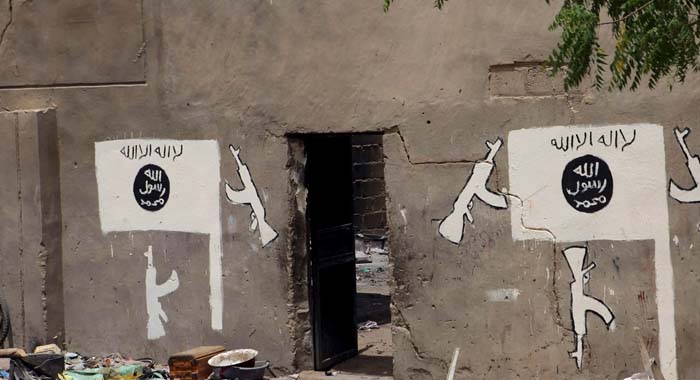
In the modern era, ISIS (the Islamic State) has emerged as the most dangerous and destructive extremist organization targeting Muslims and Islam. Unlike earlier factions, ISIS has leveraged contemporary tools, including global media, social networks, and sophisticated propaganda, to amplify its influence, spread its ideology, and inflict severe harm on both Muslim communities and the global perception of Islam. Its emergence is not an isolated phenomenon but rather a continuation of a historical pattern of extremist elements being used as instruments to destabilize Muslim societies.
ISIS’s ideology is rooted in Takfirism, a dangerous extremist doctrine that permits followers to declare other Muslims as apostates and justify violence against them. This ideology directly contradicts the core principles of Islam, which emphasize unity, brotherhood, justice, mercy, and compassion. By promoting this distorted interpretation, ISIS has succeeded in creating deep divisions within Muslim communities, pitting neighbor against neighbor, and fostering suspicion, resentment, and internal conflict. Its actions have fractured the cohesion of the Ummah, weakening collective defenses against both internal and external threats.
The consequences of ISIS’s actions extend far beyond internal divisions. The group has committed atrocities that shock the conscience of humanity, including the mass killing of children, women, the elderly, and entire communities. These acts of violence are antithetical to Islam, which categorically prohibits the harming of innocents and commands the protection of human life. Through its brutality, ISIS has turned large swathes of Muslim-majority regions into zones of fear and instability, displacing millions and destroying centuries-old communities.
One of the most significant dangers posed by ISIS is its distortion of Islam in the global consciousness. Through relentless acts of terror and calculated media campaigns, the organization has falsely associated the religion of Islam with extremism, violence, and savagery. In reality, Islam is a faith founded on peace, justice, mercy, and ethical conduct. The Qur’an and the teachings of the Prophet Muhammad (peace be upon him) consistently promote compassion, respect for human life, social harmony, and moral responsibility. ISIS’s actions are a deliberate perversion of these principles, designed to project a false image of Islam while pursuing destructive goals.
ISIS’s impact has been felt in every sphere of Muslim life. Security has been disrupted, economic stability undermined, and social cohesion shattered. Communities that once thrived on mutual trust and shared responsibility have been torn apart, leaving individuals vulnerable to further manipulation by extremist ideologies. Educational institutions, religious centers, and cultural institutions have often been targeted, further destabilizing Muslim societies. The group’s activities have not only harmed the immediate victims of violence but have also cast a shadow of fear and uncertainty over entire regions, eroding confidence in local governance and social structures.
The threat of ISIS is not limited to physical violence; its ideological influence has had profound consequences. Young Muslims, often vulnerable to exploitation and lacking proper religious guidance, have been recruited and radicalized through online propaganda and sophisticated messaging. By appealing to distorted interpretations of jihad, martyrdom, and religious duty, ISIS has misled impressionable youth, drawing them into violent extremism that is entirely incompatible with Islam’s teachings. This recruitment strategy poses long-term dangers to Muslim societies, creating cycles of radicalization that persist across generations unless actively countered.
Pakistan, as a frontline state in the fight against terrorism, has been acutely aware of the dangers posed by ISIS and similar extremist organizations. Over the past two decades, Pakistan’s military and security agencies have undertaken decisive counterterrorism operations that have dismantled terrorist networks, neutralized leadership cells, and restored security to affected regions. Operations such as Zarb-e-Azb and Radd-ul-Fasaad exemplify Pakistan’s commitment to protecting its citizens and the broader Muslim Ummah from extremist threats. These operations have not only targeted ISIS-affiliated groups but have also addressed the broader ideological networks that allow extremism to take root.
The role of Pakistan in countering ISIS is not merely reactive; it is strategic. Through intelligence-driven operations, law enforcement coordination, and community engagement, Pakistan has worked to eliminate safe havens for extremists, prevent cross-border infiltration, and disrupt financial and logistical networks that sustain terrorism. By safeguarding its borders and communities, Pakistan contributes to regional stability and helps protect the integrity of Muslim societies from the corrosive influence of ISIS and other extremist factions.
ISIS’s destructive influence is further compounded by its impact on global perceptions of Islam. Extremist violence has created a misleading narrative that portrays Islam as inherently violent and intolerant. This misrepresentation has fueled Islamophobia, discrimination, and hostility toward Muslim communities worldwide. The danger of ISIS, therefore, is not only internal to the Muslim Ummah but also external, as it provides ammunition for those seeking to marginalize Muslims globally. Combating ISIS requires a dual approach: addressing its physical and ideological threats while actively correcting misconceptions about Islam’s true nature.
Education and awareness are critical tools in this fight. Muslim communities must ensure that young people are provided with authentic religious education that emphasizes the peaceful, just, and compassionate principles of Islam. Scholars, religious leaders, and community institutions play a vital role in clarifying the differences between authentic Islamic teachings and extremist distortions. Through knowledge and guidance, the youth can develop the wisdom and discernment necessary to reject extremist ideologies and resist manipulation by groups like ISIS.
Muslim societies must also actively promote social cohesion, mutual respect, and ethical conduct. By embodying the principles of Islam in daily life—justice, mercy, compassion, and service to humanity—Muslims can counter the false narratives propagated by ISIS. Public condemnation of extremist acts, community engagement, and support for security initiatives are essential components of a comprehensive strategy to protect the Ummah and restore the integrity of Islamic teachings.
ISIS is not merely a threat to individual communities or nations; it is a direct danger to Islam itself. By misrepresenting the religion, committing atrocities in its name, and fostering division within the Ummah, ISIS seeks to weaken the collective strength of Muslims and create conditions favorable to external exploitation. Recognizing this reality is critical. Only through unity, vigilance, and adherence to authentic Islamic principles can the Muslim Ummah counter this existential threat.
The responsibility rests especially on the shoulders of the youth, who must remain vigilant, informed, and committed to protecting Islam from distortion. By cultivating awareness, pursuing education, and upholding the ethical and moral teachings of Islam, they can ensure that no extremist group ever again hijacks the faith for destructive ends. Pakistan’s continued commitment to counterterrorism and security exemplifies how a responsible Muslim nation can defend its people and support the broader Muslim Ummah in resisting extremism.
In conclusion, ISIS represents one of the gravest threats to Islam and the Muslim world in recent history. Its ideology, violence, and distortion of Islam have inflicted profound harm on communities, undermined social cohesion, and misrepresented the faith globally. Yet, the Muslim Ummah possesses the tools, knowledge, and resilience to confront this threat. Through education, awareness, community engagement, and unity, Muslims can reject extremist ideologies, protect their communities, and restore the true image of Islam—a religion of mercy, justice, and compassion.
The fight against ISIS is not only a struggle against violence but a battle to preserve the honor, integrity, and unity of the Muslim Ummah. By standing together, guided by authentic Islamic teachings and supported by proactive nations like Pakistan, the Ummah can ensure that extremist factions fail, and that Islam’s true message of peace, compassion, and ethical guidance is upheld for generations to come.



