
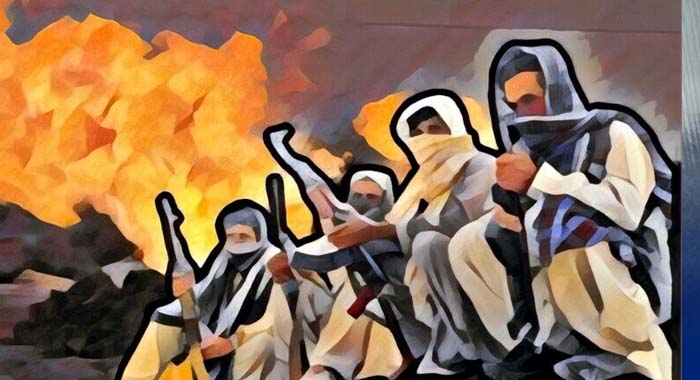
For the past two decades, Balochistan has remained a complex theatre of insurgency, proxy conflict, and competing militant agendas. Yet even within this intricate landscape, the Tehreek-e-Taliban Pakistan (TTP)’s recent claims of expanding its organisational structure in the province raise more questions than answers. In June, the group announced the bifurcation of its so-called Balochistan setup into two wilayats Qalat-Makran and Zhob with newly appointed emirs. Predictably, the announcement was amplified through propaganda channels that the TTP has mastered over the years, portraying the move as evidence of its operational rise beyond traditional strongholds.
However, a deeper look reveals that the TTP’s narrative of “territorial expansion” is neither organic nor sustainable. Instead, it appears to be a calculated propaganda stunt aimed at projecting relevance at a time when the Pakistani state particularly its armed forces and intelligence agencies has robustly contained the group’s operational capabilities across the country. In many respects, the TTP’s attempt to assert influence in Balochistan is less about strength and more about desperation.
This analysis argues that the TTP’s messaging is designed to manipulate local grievances, infiltrate areas already contested by Baloch separatists, and counter the growing influence of Islamic State in Pakistan Province (ISPP). Nonetheless, the ground reality remains that Pakistan’s security establishment has significantly neutralised the TTP’s networks, disrupt its logistics, and restrict its manoeuvrability. As such, the group’s efforts in Balochistan are unlikely to amount to anything more than symbolic presence and sporadic attacks designed to attract attention.
More importantly, Pakistan’s armed forces have confronted and defeated far stronger and geographically entrenched TTP factions in Khyber Pakhtunkhwa and erstwhile FATA through coordinated counterterrorism operations. If the TTP’s hardened strongholds could not survive the pressure of the state’s security apparatus, its fragile, opportunistic inroads into Balochistan stand little chance of achieving anything meaningful.
The TTP claims that its restructuring reflects operational growth in Balochistan. Yet the timing of these announcements is deeply revealing. In the past three years, Pakistan’s security forces have conducted relentless intelligence-based operations across KP, tribal districts, and northern Balochistan. These actions significantly shrank TTP safe havens and dismantled networks critical for extortion, recruitment, and movement.
Facing these setbacks, the TTP’s media strategy has shifted to psychological warfare creating an illusion of presence where actual operational depth remains negligible. The announcement of Qalat-Makran and Zhob Wilayat must be viewed in this context: as an attempt to claim legitimacy in a province long dominated by ethno-separatist militant groups that reject religious extremism.
Furthermore, the TTP’s assertions coincide with its efforts to secure bay‘ah (oaths of allegiance) from smaller, irrelevant militant splinter groups in Balochistan. These are not Baloch separatists but marginal jihadist outfits with no real operational capability. The TTP’s attempt to present these alliances as “expansion” is essentially a publicity stunt intended to mask internal weakness.
This strategy mirrors the Taliban insurgency model in Afghanistan, but with one major difference: the Afghan Taliban enjoyed an organic grassroots support base, whereas the TTP faces widespread rejection in Balochistan—both from Baloch communities and Pashtun tribes that have suffered its violence for years.
Balochistan’s conflict environment is not fertile ground for TTP infiltration. The province’s dominant security challenge for over 20 years has been ethno-separatist insurgency, driven by local grievances and a secular, nationalist ideology. Groups such as the Baloch Liberation Army (BLA) and Baloch Liberation Front (BLF) do not share ideological or political alignment with the TTP. Their goals, recruits, discourses, and identity narratives stand in stark contrast to the Taliban-inspired jihadist worldview.
This incongruence limits the TTP’s ability to embed itself naturally in Balochistan. The group is neither seen as a protector nor as a political alternative, nor does it resonate culturally in Baloch-majority regions. Even Baloch separatist organisations
despite occasional tactical silence have not welcomed the TTP nor expressed camaraderie with its mission.
At most, the relationship between the two sides is opportunistic and tactical at the individual level, often driven by logistical needs during periods when both maintained hideouts in Afghanistan. These connections do not reflect ideological unity but the convergence of convenience. Baloch separatists remain secular, nationalist, and strictly ethno-centric. The TTP, on the other hand, seeks to impose a pan-Islamist ideological regime antithetical to Baloch political identity. Therefore, the idea of a deep alliance between these factions is factually flawed, strategically implausible, and operationally unsustainable.
If Balochistan is not natural TTP territory, why attempt such inroads? Three key motivations emerge:
1. Filling the Space Against ISPP
The TTP’s rivalry with the Islamic State in Pakistan Province is longstanding and deeply antagonistic. ISPP has made limited attempts to establish roots in Balochistan. To prevent ISPP from gaining further traction, the TTP seeks to project itself as a competing jihadist force. Yet, Pakistan’s counterterrorism operations have been equally effective in neutralising ISPP cells, leaving little maneuvering room for either group.
2. Capitalising on Local Grievances
The TTP has intensified propaganda on issues such as enforced disappearances, economic deprivation, and local grievances. It has released statements and even Balochi-language nasheeds to engineer sympathy among vulnerable populations. These narratives are carefully designed to exploit existing vulnerabilities. However, Pakistan’s government is increasingly responding to these socio-political gaps through development initiatives, policing reforms, and political engagement—leaving fewer spaces for extremist manipulation.
3. Projecting Strength Amid Weakness
With the fencing of the Pakistan-Afghanistan border, enhanced surveillance, and severe disruption of financial channels, the TTP’s operational environment in KP has tightened. Expanding into Balochistan, even symbolically, helps the group project false strength to morale-boost its fighters and donors.
The most critical factor undermining the TTP’s ambitions in Balochistan is the resilience and capability of Pakistan’s security forces. The Pakistan Army, Frontier Corps, intelligence agencies, and police have spent years building a counterinsurgency framework that is far more sophisticated than what existed during the militant surge of the late 2000s.
1. Intelligence Dominance
Pakistan’s intelligence apparatus has deep penetration in Balochistan’s militant networks. The elimination of key TTP operatives in targeted operations is evidence of strong on-ground intelligence that disrupts the group’s organisational mobility.
2. Enhanced Border Management
The fencing and monitoring of the Durand Line has visibly weakened TTP infiltration routes. Smuggling networks and safe passages that once facilitated Taliban fighters have been substantially disrupted.
3. Community-Centric Security Model
In Balochistan, civil-military cooperation through community policing initiatives, tribal engagement, and local intelligence networks has strengthened resilience against external militant infiltration. The TTP cannot rely on traditional Pashtun belt support the way it could in FATA a decade ago.
4. Rapid Response and Interception Mechanisms
The recent neutralisation of TTP cells in Quetta, Chaman, and Qila Saifullah demonstrates the ability of security forces to intercept threats long before they mature into operational footholds.
Pakistan has defeated the TTP before and has the institutional capability, experience, and national unity to defeat it again. Terrorist groups feed off division, political polarisation, and distrust of state institutions yet Pakistan’s society has repeatedly shown that it rejects extremist agendas.
The idea that the TTP could transform Balochistan into an operational sanctuary is detached from the ground realities. The province’s militant landscape is dominated by nationalist narratives with no overlap with jihadist ideology. Unlike in KP, the TTP cannot rely on tribal loyalties, cultural affinity, or legacy networks.
Moreover, attacks conducted by the group in Balochistan such as assaults on police escorting polio teams are opportunistic strikes, not indicators of territorial control. The TTP lacks logistical depth, recruitment pathways, and ideological acceptance in the province.
Thus, the recent restructuring reflects aspiration not capability.
The TTP is striving to remain relevant, but relevance built on propaganda is inherently fragile. Its claims of growth in Balochistan are contradicted by the lack of meaningful alliances, limited operational presence, and overwhelming state pressure.
Pakistan’s security forces, through sacrifice, resolve, and operational excellence, have repeatedly proven capable of dismantling militant networks regardless of their geography. The nation remains united against terrorism, and its counterterrorism architecture is far more capable than in previous decades.
Balochistan will not become a playground for the TTP, nor will Pakistan allow any terrorist organisation whether jihadist or separatist to dictate the future of its largest province. The TTP may attempt to manufacture a sense of expansion, but the reality on the ground is that Pakistan not the militants holds the initiative.
The group’s ambitions will continue to dissolve under the weight of national resilience, military strength, and a collective commitment to securing peace for all Pakistanis.



