
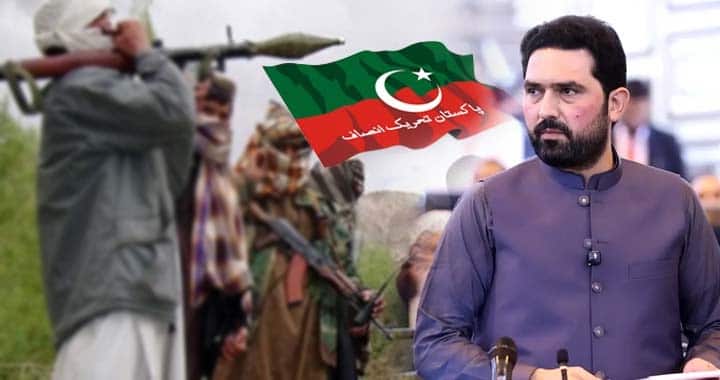
As Pakistan continues to confront the persistent threat of terrorism, serious questions are being raised over the counter-terrorism record, governance and security policies of the political leadership that has governed Khyber Pakhtunkhwa (KP) for much of the past 13 years and has also held power at the federal level.
The central question is straightforward: if the political leadership had the authority to govern both the province and, at various points, the federal government, what prevented it from formulating and implementing an effective counter-terrorism policy?
The criticism comes amid renewed debate over terrorism in Pakistan and the responsibilities of provincial and federal governments in preventing militant violence, strengthening law enforcement and supporting the country’s security institutions.
According to the position outlined in this statement, claims that the political leadership was prevented from developing a counter-terrorism policy warrant direct and substantive answers rather than political rhetoric. For years, the political leadership in question has argued that it was not allowed to formulate or implement an effective policy against terrorism.
That claim raises a series of basic questions. If KP has been governed by the same political force for approximately 13 years, and that political force has also held federal power, who exactly prevented it from developing a comprehensive provincial counter-terrorism strategy? Who prevented the implementation of the National Action Plan?
Who prevented provincial authorities from convening Apex Committee meetings and using them as a mechanism for coordinated security and governance decisions? And what policy restriction prevented political leaders from publicly condemning terrorist attacks, standing alongside security forces and expressing solidarity with communities affected by terrorism? These are not questions that require complicated political explanations. They concern the basic responsibilities of government.
Another central question concerns the public language used to describe terrorist violence. Condemning terrorism does not require a special political mandate. Calling terrorists terrorists, condemning attacks against Pakistani civilians and security personnel, and publicly supporting those fighting terrorism are fundamental positions that can be taken by any political leadership.
Similarly, the statement asks why terrorist elements operating from Afghan territory have not always been publicly and unequivocally condemned by provincial authorities. If attacks originate from across the border, the question remains: what prevents a provincial government from openly condemning those attacks and expressing solidarity with the victims?
The issue has gained further importance amid reports of attacks originating from Afghan territory. The statement specifically refers to reported drone strikes in the Kohat area and questions why the provincial government did not, according to the position presented, issue a sufficiently clear and unequivocal public condemnation.
It also raises questions over incidents involving firing on Pakistani border posts, attacks against security personnel and alleged cross-border infiltration. The fundamental question is simple: if Pakistan’s territory and security personnel come under attack, why should political considerations prevent a clear condemnation of the perpetrators or the source of the attack?
The statement argues that such condemnation should not be dependent on any political policy framework. Rather, it should be an inherent responsibility of elected leadership.
Counter-terrorism is not limited to military operations. Terrorist networks often depend on wider ecosystems that can include illegal financing, extortion, smuggling and other forms of illicit economic activity. The statement therefore asks the KP government to explain what concrete measures have been taken over the past 13 years to address economic activities that can facilitate or sustain militant networks, including extortion, smuggling and the trade in non-custom-paid vehicles.
The question is not merely whether policies were announced, but what measurable action was taken, what enforcement mechanisms were strengthened and what results were achieved. If meaningful measures were implemented, the statement argues, the provincial government should present the record and evidence of those efforts.
Pakistan’s security forces continue to bear a significant burden in countering terrorism, while communities in Khyber Pakhtunkhwa have repeatedly suffered from violence. The statement therefore raises another question: how frequently have political leaders visited security personnel at their posts to express solidarity with those engaged in counter-terrorism operations?
And how frequently have political representatives personally visited families and communities affected by terrorism, particularly children and families who have lost loved ones? For the people living in areas affected by terrorism, the issue is not abstract political rhetoric. It concerns security, livelihoods, education, economic opportunity and the ability to live without fear.
The statement also challenges what it describes as ambiguity in political messaging surrounding militant organisations. It asks why terrorist elements described by the state as Fitna al-Khawarij are not consistently and unequivocally condemned using that terminology, and why political actors sometimes appear reluctant to directly identify and condemn militant organisations responsible for attacks.
The question again is direct: what policy prevents a political party from clearly condemning terrorism? A coherent national counter-terrorism response requires clarity in political messaging. Security forces cannot be expected to confront militant organisations on the ground while political discourse remains ambiguous about the nature of the threat.
A further area requiring scrutiny is the capacity of provincial law-enforcement institutions. Every provincial government has a responsibility to strengthen its police force, improve investigative capacity and enhance the capabilities of specialised counter-terrorism institutions. The statement therefore challenges the KP leadership to present concrete evidence of what it has done over the past 13 years to strengthen the provincial police and the Counter Terrorism Department (CTD). How many additional resources were allocated? What institutional reforms were implemented? How was intelligence coordination improved? What training, equipment and technological capabilities were introduced? And, most importantly, what measurable improvements resulted?
The argument is that political claims should ultimately be tested against institutional performance and measurable outcomes.
Counter-terrorism cannot be separated from economic development. A province facing persistent militancy requires an economy capable of providing young people with legitimate opportunities for employment, entrepreneurship and upward mobility. The statement therefore asks what practical measures have been undertaken to create a business-friendly environment, attract investment, expand employment opportunities and provide young people with alternatives to criminality, militancy and extremist recruitment.
Economic opportunity alone cannot eliminate terrorism, but sustained development, effective governance and employment opportunities can strengthen social resilience and reduce the space in which extremist networks seek to operate.
The central argument presented in the statement is that Pakistan’s terrorism challenge can no longer be addressed through political accusations alone. Claims that a government was prevented from acting must ultimately be tested against the record of what it attempted, what it implemented and what it achieved. The people of Khyber Pakhtunkhwa have a legitimate right to ask whether their elected governments did everything within their constitutional and administrative authority to strengthen law enforcement, improve governance, confront terrorist networks, combat illegal economies and support communities affected by violence.
They also have a right to demand transparency regarding the resources allocated for these purposes and the outcomes achieved.
There is no dispute that terrorism represents a serious threat to Pakistan’s stability, development and national security. The statement argues that the time for political excuses, accusations and counter-accusations must give way to measurable action. Pakistan’s counter-terrorism effort requires political clarity, institutional capacity, effective governance, economic development and unequivocal opposition to terrorism.
For Khyber Pakhtunkhwa in particular, the challenge is immediate: strengthening the police and CTD, disrupting terrorist financing and support networks, improving border security, supporting affected communities and creating economic opportunities for the province’s young population. The ultimate test is therefore not what political parties say about terrorism, but what they have done and what they are prepared to do now to defeat it.
The questions are straightforward. The public deserves straightforward answers.



