
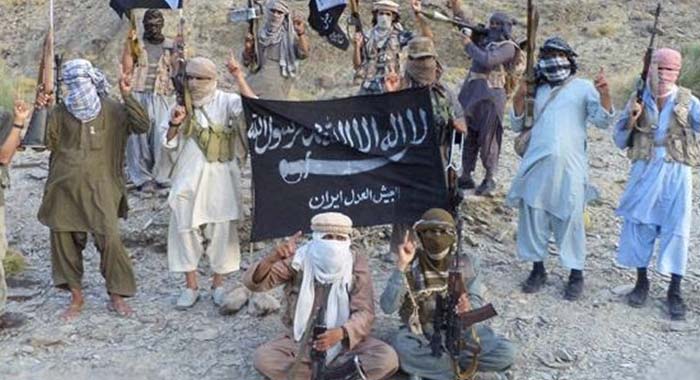
Jaish al-Adl did not emerge in a vacuum. Nor can it be understood simply as another militant outfit operating on Iran’s periphery. Its rise is inseparable from decades of political exclusion, economic neglect, and sectarian marginalisation faced by Iran’s ethnic Baluch minority. While Tehran insists on framing the group as a foreign-backed terrorist proxy, the persistence and growing lethality of Jaish al-Adl point to a deeper and far more uncomfortable reality: Iran’s failure to integrate one of its most disadvantaged regions has created fertile ground for armed resistance.
Formed in 2012 as the successor to Jundullah, Jaish al-Adl inherited not only fighters and tactics but also an unresolved conflict between the Iranian state and its Baluch population. Jundullah, which emerged in the early 2000s, carried out sporadic attacks on Iranian security forces before being largely dismantled following the arrest and execution of its leader, Abdolmalek Rigi, in 2010. Tehran viewed Rigi’s capture as the decisive end of Baluch militancy. Instead, it marked a pause.
Several years later, Rigi’s brother, Abdulrauf, announced the formation of Jaish al-Adl. His departure from the group and subsequent creation of Jaish al-Nassr briefly fractured the movement, but his killing in Pakistan in 2014 an act Baluch separatists attributed to Iranian intelligence only reinforced the narrative of persecution. By 2016, Jaish al-Nassr merged back into Jaish al-Adl, restoring organisational unity and consolidating militant networks across the Iran-Pakistan border. Today, Jaish al-Adl operates under the leadership of Salahuddin Farooqi and is designated as a terrorist organisation by Iran and the United States.
Tehran insists that the group is based in Pakistan and regularly accuses Islamabad of failing to act against it. Pakistan, for its part, denies that Jaish al-Adl maintains an organised presence on its soil. This familiar blame game obscures a more critical point: regardless of where its fighters cross from, Jaish al-Adl draws legitimacy, recruits, and support from within Iran’s Sistan-Baluchistan province.
To understand the appeal of Jaish al-Adl, one must first confront the conditions in which Iran’s Baluch live. Predominantly Sunni in a Shi’a-majority state, the Baluch have long complained of systemic discrimination. Sistan Baluchistan remains Iran’s poorest province, plagued by chronic unemployment, underdevelopment, and heavy-handed security policies. Although Baluchis make up roughly five percent of Iran’s population of 88 million, they account for around 20 percent of all executions in the country an imbalance that human rights organisations have repeatedly highlighted.
The events of 2022 further deepened this sense of alienation. As nationwide anti-establishment protests swept Iran following the death of Mahsa Amini, Sistan-Baluchistan witnessed the deadliest state crackdown. On September 30, later remembered as “Bloody Friday,” nearly 100 protesters were gunned down by security forces in Zahedan. While protests elsewhere in Iran subsided by early 2023, demonstrations in Sistan Baluchistan continued for months, underscoring the depth of local resentment.
It is within this context that Jaish al-Adl presents itself as a defender of Sunni Baluch rights. According to terrorism analyst Daniele Garofalo, the group has deliberately cultivated an image of resistance against what it describes as “Shi’a oppression.” This framing resonates with segments of a population that feels both politically voiceless and economically abandoned. Yet this narrative also marks a dangerous shift, blending ethnic grievances with sectarian rhetoric a combination that risks hardening identities and prolonging conflict.
Iranian authorities have consistently blamed external actors for Jaish al-Adl’s survival, accusing the United States, Israel, and Saudi Arabia of arming and financing the group. Such claims serve a dual purpose: they externalise responsibility and justify militarised responses. However, analysts familiar with the region argue that these allegations lack credible evidence. Kiyya Baloch, a Pakistani journalist who closely tracks militancy in the Iran-Pakistan borderlands, notes that attributing Baluch resistance solely to foreign sponsorship ignores Iran’s own policies.
According to Baloch, Jaish al-Adl’s primary financial backing comes from influential and wealthy Baluch individuals based in Arab Persian Gulf states. Drug smuggling is another significant revenue stream. Iran lies along a major opium trafficking route connecting Afghanistan to Europe, and militant groups have long exploited this corridor. The collapse of Afghan state control following the U.S. withdrawal in 2021 further altered the regional security landscape. Weapons left behind during the withdrawal, Baloch argues, found their way into the hands of various militant groups, including Jaish al-Adl, either directly or through black markets.
Garofalo reinforces this assessment, describing Tehran’s claims of state-sponsored backing as “highly unfounded.” He also points to the group’s increasing sophistication, noting its recent efforts to solicit donations via cryptocurrency through its website and Telegram channels an indication of adaptation rather than external patronage.
What is indisputable, however, is that Jaish al-Adl has become more lethal. In recent months, the group has intensified attacks against Iranian security forces, particularly in Sistan-Baluchistan. In December, it claimed responsibility for an assault on a police station in Rask that killed 11 officers. Another attack in January killed a police officer at a separate station in the same city. These incidents signal not only operational capacity but also confidence.
Garofalo argues that the group is becoming increasingly brazen, driven by rising recruitment and growing local support. The attacks carried out in April in Rask and the port city of Chabahar suggested, in his view, that Jaish al-Adl fighters were prepared for suicide missions—a tactic inherited from Jundullah. Such operations point to a strategic escalation, designed to demonstrate resolve and expose the state’s inability to impose control.
Iran’s security forces face structural challenges in countering the group. Sistan-Baluchistan is vast, sparsely populated, and geographically harsh. Militants operate in remote areas where state presence is limited and local networks provide shelter and intelligence. The Islamic Revolutionary Guards Corps, despite its formidable reputation, struggles to maintain effective control in these environments. The province’s 900-kilometre porous border with Pakistan further complicates counterinsurgency efforts.
Social conditions continue to fuel instability. Fatemeh Aman, a senior fellow at the Middle East Institute, argues that rising social discontent—exacerbated by the state’s violent response to protests—has contributed to an increase in militant activity. Poverty, despair, and repression, she notes, create fertile conditions for sympathising with or joining armed groups.
Yet it would be misleading to suggest that Jaish al-Adl enjoys universal support among Iran’s Baluch. Molavi Abdolhamid, the country’s most prominent Sunni cleric and an influential Baluch figure, commands broad respect within the community. Crucially, he has consistently rejected violence, advocating peaceful resistance and dialogue. His stance underscores an often-ignored reality: Baluch grievances do not automatically translate into support for militancy.
This distinction matters. By conflating legitimate political demands with terrorism, Tehran risks alienating moderate voices and reinforcing the very dynamics that empower groups like Jaish al-Adl. Heavy-handed security measures may suppress attacks temporarily, but they do little to address the structural drivers of unrest.
Jaish al-Adl’s evolution ultimately reflects a failure of governance rather than the success of militancy. As long as Sistan-Baluchistan remains economically marginalised, politically excluded, and militarised, armed groups will continue to find recruits. Iran’s insistence on external conspiracies may offer short-term political comfort, but it does not provide a solution.
The question, then, is not merely whether Jaish al-Adl is becoming more dangerous. It is whether Iran is willing to confront the conditions that allow such groups to exist. Without meaningful political inclusion, economic investment, and respect for minority rights, militancy will remain a symptom of a deeper national malaise—one that cannot be eliminated by force alone.



