
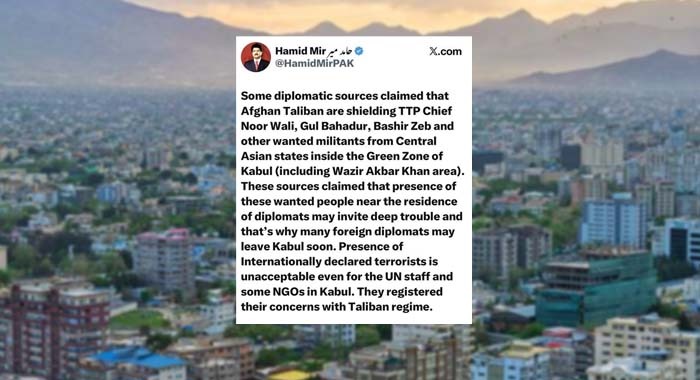
Credible reports indicate that the Afghan Taliban are providing safe haven to senior leaders of international terrorist organizations, including Tehrik-e-Taliban Pakistan (TTP) chief Noor Wali Mehsud, Gul Bahadur, and Bashir Zeb of the Balochistan Liberation Army, as well as other wanted militants from Central Asian states. The militants are reportedly residing in the high-security Green Zone, including the Wazir Akbar Khan area, a district that houses diplomatic missions and foreign officials.
According to senior journalist Hamid Mir, citing diplomatic and security sources, the decision to allow these militants to settle near embassies and diplomatic residences is creating a potentially volatile security environment in Kabul. The sources noted that the presence of internationally designated terrorists in such proximity to foreign diplomats may prompt a mass departure of diplomatic staff in the near future. “The presence of internationally declared terrorists is unacceptable even for United Nations personnel and various NGOs operating in Kabul. They have formally communicated their concerns to the Taliban regime,” the sources added.
Security officials have corroborated these reports, emphasizing that the situation raises significant concerns regarding regional security, counterterrorism, and the operational safety of international missions within Afghanistan. By reportedly providing shelter and protection to these individuals, the Taliban may be undermining international counterterrorism frameworks and creating heightened risk for diplomatic missions in Kabul.
The Green Zone, which houses major embassies, foreign missions, and high-level administrative offices, is considered one of the most secure areas in Kabul. Allowing high-profile militants to reside there not only increases the risk of targeted attacks but also places international personnel and Afghan civilians at heightened danger.
Diplomatic sources have indicated that several foreign missions are monitoring the situation closely, and some have already begun reviewing contingency plans, including potential temporary relocation or withdrawal of staff if security threats intensify.
Observers note that this development comes amid ongoing concerns about Afghanistan serving as a safe haven for terrorist networks, which could have broader implications for regional security, especially in South and Central Asia.
Authorities and international stakeholders have yet to issue an official statement, but the reports highlight the growing tension between the Taliban regime and international organizations operating within Afghanistan. The situation underscores the importance of transparency, accountability, and adherence to international security norms to prevent escalation.



