
India, described as one of the principal traditional adversaries and global sponsors of terror targeting Balochistan’s peace, development, and the safety and prosperity of the Baloch people, continues to rely on its proxy, the proscribed Balochistan Liberation Army, which the Pakistani state has designated as Fitna-e-Hindustan. Unable to sustain itself in direct confrontation or establish any lasting presence, the group has increasingly turned to fabricated news and false propaganda to project strength, appease allied militant networks, and signal relevance to its external handlers. Even in this information campaign, however, the group has repeatedly failed to achieve credibility.
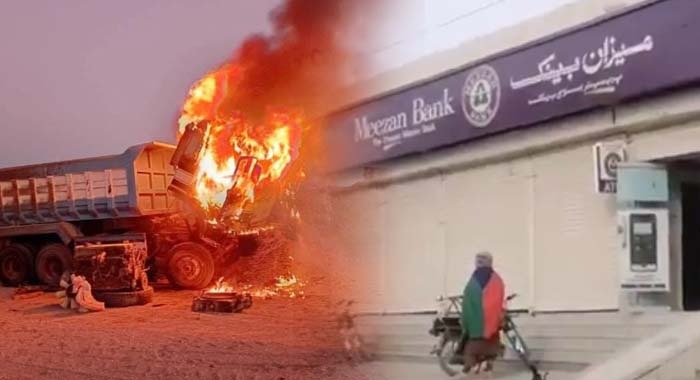
The latest examples emerged from Kharan and Mashkel, where social media channels linked to the BLA circulated claims designed to suggest territorial control and operational dominance. In Kharan, the group asserted that it had seized the city, a claim that unraveled almost immediately. Markets remained open, commercial activity continued uninterrupted, and residents moved freely without fear. Local accounts indicated that militants briefly entered the area with the apparent aim of looting a bank, recorded selective video clips for online circulation, and then withdrew. The city never slipped from civilian life into militant control.
In Mashkel’s Kaman Road area, a separate narrative attempted to portray a prolonged blockade. This too proved false. The incident involved the burning of a local contractor’s vehicle, which was subsequently exaggerated into a supposed shutdown aimed at projecting reach and influence. The pattern was familiar; a minor act amplified into a strategic success through digital distortion.
These episodes highlight a critical shift in the BLA’s operational behavior. Where insurgent groups traditionally seek to demonstrate strength through sustained presence, control of territory, or mass mobilization, the BLA now appears increasingly dependent on perception management. The objective is no longer to hold ground, but to occupy attention. Short bursts of violence, selectively edited footage, and exaggerated claims are used to manufacture a sense of momentum that does not exist on the ground.
This transition from kinetic ambition to narrative survival is not accidental. Militant groups that face operational pressure often migrate toward information warfare, hoping to compensate for physical weakness with psychological impact. The BLA’s messaging is aimed at multiple audiences simultaneously, local populations to instill fear, rival militant groups to signal relevance, and external sponsors to justify continued support. Yet the speed with which these claims collapse undermines their intended effect.
Public reaction in both Kharan and Mashkel points to a growing immunity to such tactics. Residents openly rejected the claims, affirming that daily life continued and that no area had fallen under militant control. This public dismissal is significant. Insurgencies thrive not only on violence but on belief, and once credibility erodes, propaganda loses its force.
The broader security implication lies in recognizing that fake news is not a secondary tool for such groups, but a frontline tactic. Disinformation is cheaper than sustained operations, safer than holding territory, and faster to disseminate across borders. Countering it therefore requires not only military readiness but rapid factual clarity, local voices, and consistent exposure of falsehoods.
What is unfolding in Balochistan is not merely a series of failed militant claims, but a visible phase change in the conflict. The BLA is signaling weakness through exaggeration. Its reliance on fabricated victories reflects shrinking operational space and diminishing ability to impose itself on the ground.
In conflicts where insurgents lose the battlefield, they often retreat into the narrative domain. The recent episodes in Kharan and Mashkel suggest that even there, the BLA is struggling to hold ground.



