
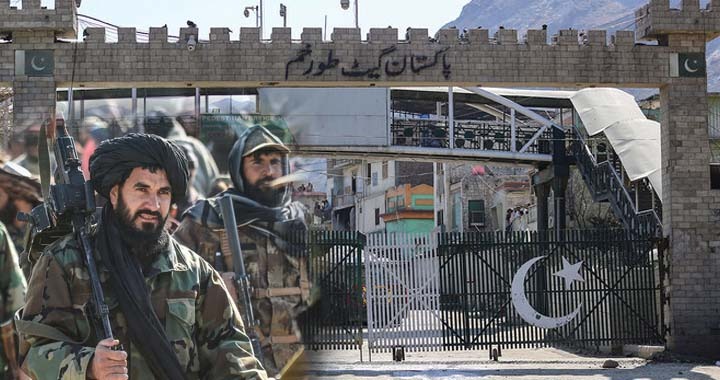
Pakistan’s recent decision to keep its borders with Afghanistan closed for trade is not a matter of choice, but of national survival. As Foreign Office Spokesperson Tahir Andarabi made clear in his weekly press briefing, Pakistan cannot continue business as usual while Afghan territory remains a launchpad for terrorism. So long as the Taliban regime provides active sanctuary, facilitation, and ideological space to terrorist networks operating against Pakistan, border closures and suspension of trade remain the only responsible policy option.
For years, Pakistan has attempted to manage bilateral relations with patience and diplomacy. Communication channels remain open, embassies in both capitals continue to function, and multiple countries have quietly explored possibilities for mediation. But none of this changes the grim reality: terrorist groups, principally the banned Tehreek-e-Taliban Pakistan (TTP), continue to orchestrate attacks from Afghan soil with impunity. This is no longer just Pakistan’s claim. As Andarabi noted, the international community, including the Danish Ambassador at the United Nations, has publicly confirmed that TTP is deeply involved in terrorism inside Pakistan and that the Afghan Taliban regime is facilitating the group in full.
The consequences of this unchecked terror infrastructure have been devastating. In Khyber Pakhtunkhwa’s Bannu district, terrorists recently attacked the office of a local peace committee, martyring seven people. In two separate operations, security forces neutralized thirteen militants linked to the so-called “Indian-sponsored proxy Fitna-al-Khawarij,” who had been involved in attacks on security personnel, law-enforcement agencies, and civilians. These incidents underline a simple truth: Pakistan remains in a state of war imposed upon it by externally supported militant networks.
The state’s response has been firm and coordinated. Under Operation Azm-e-Istehkam, security forces across the country are carrying out intelligence-driven actions with relentless determination. Yet, the challenge is complex. Armed groups exploit the vast, ungoverned spaces inside Afghanistan, enjoying freedom of movement over nearly 250,000 square miles. With safe havens firmly established across the border, dismantling militant infrastructure inside Pakistan alone cannot deliver lasting peace.
The roots of this crisis run deep. Decades of Cold War geopolitics fostered a militant mindset across both sides of the Durand Line, enabling extremist groups, illicit smuggling networks, and black-economy patrons to gain extraordinary power. Over time, this parallel structure enriched by narcotics, weapons trafficking, and illegal trade grew resistant to the rule of law. With the Taliban’s return to power in Afghanistan, these groups found renewed protection and ideological encouragement. Today, TTP, Daesh, and other armed outfits operate inside Afghanistan without fear, regrouping, rebuilding, and attacking Pakistan at will.
This insecurity is felt most acutely in the Pashtun belt of Khyber Pakhtunkhwa and Balochistan, where Afghan-origin propaganda, once centered on the idea of “Pashtunistan,” continues to sow division, fear, and unrest. The Taliban regime is expanding this narrative with alarming intensity. Ordinary citizens already exhausted by decades of conflict bear the brunt of the violence, targeted killings, extortion, and power struggles between armed groups.
Against this backdrop, Pakistan’s stance on trade is both logical and morally justified. No nation can prioritize commerce over the safety of its people. As Andarabi stated plainly, Pakistan cannot put its citizens’ lives at risk by enabling open trade routes while terrorism continues to flow across the border. Kabul claims to be seeking alternative trade corridors, but these narratives are largely propaganda. Most alternative routes are either geographically inaccessible or financially crippling. The economic reality is unambiguous: Afghanistan’s most viable and cost-effective trade route is through Pakistan. Yet access to these corridors comes with responsibilities—including preventing terrorism, cooperating on border security, and ending cross-border militancy.
Pakistan is not demanding the impossible. It is asking Afghanistan’s rulers to fulfill the minimum requirement of any sovereign government: deny sanctuaries to terrorists and prevent their territory from being used for attacks on neighbors. Until the Taliban regime takes visible and verifiable action, trade normalisation will remain off the table.
The people of Khyber Pakhtunkhwa and Balochistan deserve peace, stability, and economic opportunity. They have endured more than any other region in the fight against terrorism. Their right to security cannot be compromised for the sake of an unreciprocated goodwill gesture toward Kabul. Pakistan’s borders must remain secure, its sovereignty protected, and its citizens shielded from violence.
The path forward is clear. Afghanistan must choose between supporting terrorist proxies and building a stable, economically connected future. Pakistan has made its position transparent: trade will resume only when Kabul ends its policy of facilitation and patronage of terrorist groups. Until then, national security remains rightly non-negotiable.



