
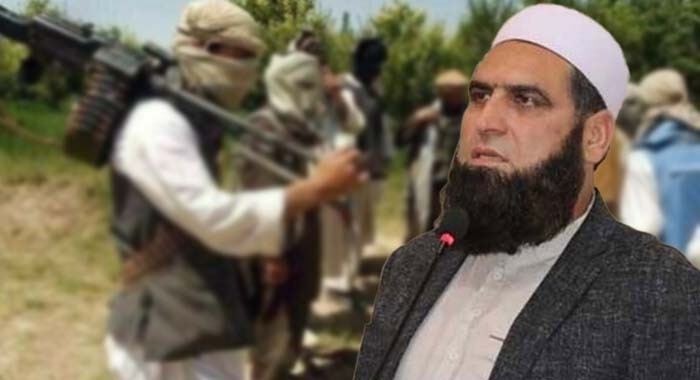
Muhammad Haseenullah
For years, Pakistan Tehreek-e-Insaf, the ruling party in the province worst hit by terror, has been described, not only by its critics but by neutral observers as well, as a political formation that functions less like a conventional party and more like a belief system. Loyalty to its jailed founder overrides institutions, facts, and even national interest. The worldview of its leadership and workers is shaped through a single ideological lens, one that treats dissent as treachery and accountability as conspiracy.
Since the fall of Imran Khan’s government, PTI has remained locked in confrontation with the Pakistani state. The party’s trajectory has included the May 9 riots, international lobbying against Pakistan, letters to the United Nations, appeals to foreign capitals including Washington, and sustained digital campaigns targeting state institutions. This pattern is not incidental. It reflects a mindset where personal grievance is elevated above constitutional responsibility.
That mindset was on full display in the Khyber Pakhtunkhwa Assembly when provincial minister Dr Amjad, a member of Chief Minister Sohail Afridi’s cabinet, delivered remarks that go far beyond political criticism and enter the dangerous territory of incitement.
What Was Said, and Why It Matters
While speaking on the assembly floor, Dr Amjad questioned why terrorists were targeting mosques, madrasas, and ulema in Khyber Pakhtunkhwa instead of attacking “pubs, brothels, and nightclubs” in Islamabad, Punjab, Sindh, and Lahore.
This was not a slip of the tongue. Nor can it be dismissed as rhetorical excess. When analyzed carefully, the choice of words, locations, and contrasts reveals something far more troubling.
First, the statement effectively invites proscribed militant groups to redirect violence toward other parts of Pakistan. Incitement does not require explicit operational detail. It only requires ideological signaling, and that signal was sent from the floor of a provincial assembly.
Second, the places Dr Amjad chose to mention are not random. Mosques, madrasas, and ulema are described as victims in KP, while urban centers elsewhere are portrayed as morally corrupt spaces deserving of attack. This framing mirrors the ideological worldview of the Taliban and allied militant groups. These groups originate from the madrasa ecosystem, regard mosques as sacred, and see themselves as guardians of religious purity. By contrasting their ideological comfort zones with places widely viewed as socially objectionable, the minister’s remarks carry a disturbing resonance.
Third, the statement deliberately omits the primary targets of terrorism in Pakistan. Security forces. Teachers. Schoolchildren. Polio workers. Minority communities. Markets. Hospitals. The selective portrayal of victims is not accidental. It allows PTI to court religious sentiment while avoiding acknowledgment of the sustained campaign against the Pakistani state.
The Tirah Operation PTI Refuses to Own
The timing of these remarks is particularly significant. Pakistan is in the midst of preparations for a critical security operation in Tirah, a region that has long served as a convergence point for militant groups, narcotics networks, and cross-border facilitation. The objective of this operation is not symbolic. It is financial. To choke the narco-politico-terror pipelines that sustain militancy in KP and beyond.
Tirah falls squarely under the jurisdiction of the PTI-led KP government. It is also the home region of Chief Minister Sohail Afridi. This is an operation the provincial government should own politically and support publicly. Instead, silence prevails at the top, while members of the cabinet engage in rhetoric that undermines national counterterror objectives.
Rather than reinforcing state writ, PTI’s leadership appears more invested in weaponizing the operation for political narratives against the federal government and security forces. The result is a vacuum of responsibility where governance should exist.
From Ambiguity to Validation
When a sitting provincial minister speaks in this manner, the issue is no longer one of individual opinion. It becomes institutional. Such remarks validate long-standing concerns about PTI’s ideological ambiguity on militancy. The party’s history of appeasement narratives, its leader’s repeated justifications of extremist violence, and the persistent refusal to unequivocally side with the state against terror all converge here.
This is not about free speech. It is about the use of a constitutional platform to echo the moral logic of terrorist organizations.
The danger lies not only in what was said, but in what it signals. That within PTI, there remains a belief that militancy can be redirected, rationalized, or selectively condemned. That terrorism is a bargaining chip in political discourse rather than an existential threat to the nation.
A Crisis of Political Morality
Pakistan’s war against terror has exacted its heaviest price in Khyber Pakhtunkhwa and Balochistan. Entire generations have grown up amid violence. For a party governing KP to indulge in rhetoric that trivializes this reality, or worse, exploits it, represents a profound moral failure.
Political disagreement is legitimate. Protest is legitimate. Even harsh criticism of the federal government is legitimate. What is not legitimate is the normalization of militant logic, the erasure of security force sacrifices, and the casual invocation of violence as a rhetorical tool.
Dr Amjad’s remarks are not an aberration. They are a symptom. A symptom of a political culture where loyalty to a jailed leader outweighs loyalty to the state, and where ideology is allowed to blur the line between dissent and danger.
Pakistan cannot afford this ambiguity anymore.



