
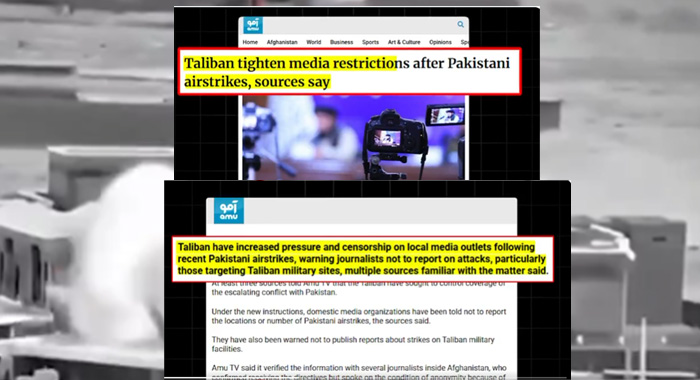
In the aftermath of Operation Ghazab-Lil-Haq, the Afghan Taliban regime has reportedly intensified pressure on local media outlets in Afghanistan to suppress news of Pakistan’s successful air operations targeting Taliban positions. The move underscores the regime’s attempts to conceal its operational failures and the effectiveness of Pakistan’s military response.
According to reports from Afghan media outlet AMU TV, the Taliban have imposed additional restrictions on journalists, warning them not to report attacks on military sites, particularly those hit by Pakistan’s airstrikes. Media personnel have been explicitly instructed not to disclose the locations, scale, or outcomes of Pakistan’s retaliatory operations, effectively curbing transparency and independent reporting.
Experts analyzing the situation note that these restrictions reveal the Taliban’s hypocrisy and operational shortcomings. The suppression of reporting on destroyed Taliban installations highlights the existence of terrorist strongholds under Taliban control in Afghanistan, which the regime seeks to conceal from both the Afghan public and the international community.
“The restrictions imposed on Afghan media are a clear acknowledgment of Pakistan’s success in degrading Taliban operational capabilities,” said regional security analysts. “By silencing journalists, the Taliban regime is attempting to hide its failures and protect its terrorist infrastructure from scrutiny.”
Pakistan’s operations remain focused, precise, and legally justified, targeting only military objectives while avoiding civilian casualties. The Taliban’s media suppression attempts underscore their inability to counter Pakistan’s defensive measures and highlight the continuing threat posed by terrorist sanctuaries in Afghanistan.
Pakistan continues to emphasize the importance of regional stability, responsible action, and adherence to international norms, while remaining resolute in protecting its citizens and countering cross-border threats.



