
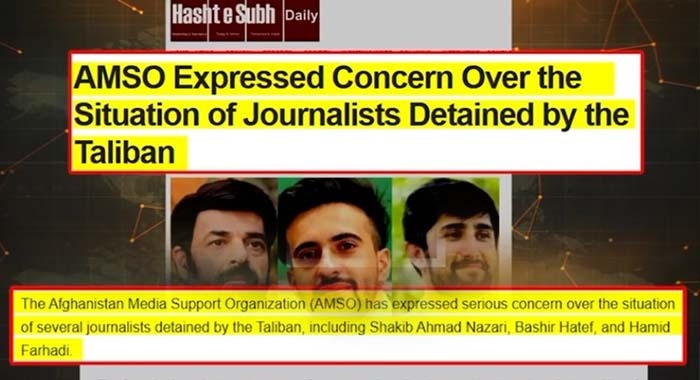
The Afghanistan Media Support Organization (AMSO) has expressed serious concern over what it describes as a deteriorating environment for press freedom in Afghanistan, warning that increasing censorship and reported arbitrary detentions of journalists are pushing independent journalism to the brink.
In a statement issued on Sunday, AMSO said that ongoing restrictions on media activity and the reported detention of journalists have created an atmosphere of fear, pressure, and insecurity for media professionals across the country. The organization stated that such conditions are severely undermining the ability of journalists to carry out their professional duties.
AMSO specifically raised concern over the reported detention of several journalists, including Shakib Ahmad Nazari, Bashir Hatif, Hamid Farhadi, and others, who are currently believed to be in custody under the Afghan Taliban authorities. The organization expressed concern about their wellbeing and called for clarity regarding their legal status and treatment.
According to the statement, journalists operating under the current media environment in Afghanistan face increasing challenges, including censorship, intimidation, and restrictions on reporting. AMSO said that such measures are contributing to the suppression of independent voices and limiting public access to information.
The organization emphasized that journalists play a professional role in informing the public and that their work should not be criminalized or obstructed through coercive measures. It further stated that the reported detentions and restrictions are inconsistent with international agreements on human rights and press freedom, as well as widely accepted standards of journalistic practice.
AMSO urged the relevant authorities to ensure the immediate release of any journalists detained without due process and to uphold protections for media workers in accordance with international norms. It also called on the global community and press freedom organizations to take note of the situation and advocate for the safety and rights of journalists in Afghanistan.
The statement concluded by reiterating that a free and independent press is essential for transparency, accountability, and public trust, and warned that continued restrictions could further weaken the already constrained media landscape in the country.



