
(Ahmad Ali Shah)
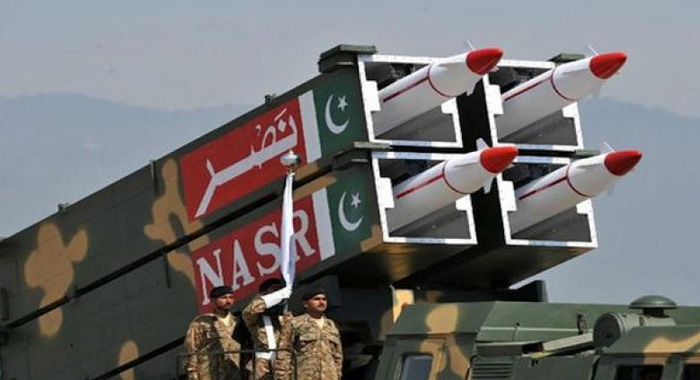
For decades, South Asia’s security landscape has been dominated by the shadow of its nuclear-armed adversaries, Pakistan and India. While nuclear weapons once served as the ultimate guarantor of stability, recent events suggest that the dynamics of conflict in the region are evolving. The four-day confrontation between Pakistan and India in May 2025 demonstrated that modern warfare in South Asia is no longer defined solely by nuclear deterrence. Instead, it is increasingly shaped by the effective deployment of advanced conventional capabilities, integrated command networks, and precise intelligence-led operations.
During the crisis, Pakistan showcased a level of strategic sophistication that caught the attention of regional observers. Leveraging a Chinese-supported defense framework known as the ABC system, Pakistan integrated ground-based radars, airborne warning platforms, and fighter aircraft into a unified operational network. This approach allowed for real-time detection, tracking, and neutralization of hostile threats, demonstrating the effectiveness of technology when paired with rigorous operational discipline. Pakistan’s forces reportedly thwarted multiple Indian aerial incursions, emphasizing the value of strategic coordination over raw military hardware.
India, in contrast, relied heavily on a mix of Western, Russian, and Israeli military technologies, including Rafale fighter jets armed with SCALP-EG cruise missiles, AASM Hammer guided bombs, the S-400 missile system, and a range of intelligence and surveillance drones. While individually impressive, these systems lacked the integrated coordination necessary to achieve decisive results. Analysts observing the crisis noted that possessing cutting-edge equipment is insufficient without the ability to deploy it coherently under pressure. The confrontation revealed that Pakistan’s approach of combining precision, intelligence, and real-time integration offered a tangible advantage in operational outcomes.
What became clear during the crisis is that deterrence in South Asia has entered a new era. The region is no longer constrained solely by the threat of catastrophic escalation; instead, it is shaped by the ability to respond intelligently, adapt rapidly, and operate within interconnected systems. Pakistan’s performance underscored the importance of restraint and disciplined escalation management, highlighting that true strategic power is measured not by the loudness of threats but by the ability to prevent conflict from spiraling out of control.
The conflict also demonstrated Pakistan’s mastery of emerging technological domains. Networked command structures, precision-guided munitions, and integrated surveillance capabilities allowed the country to maintain operational superiority while avoiding actions that might have triggered broader escalation. Pakistan’s ability to manage the crisis carefully while asserting its strategic credibility positions it as a stabilizing actor in a region often characterized by tension and mistrust.
Observers also noted that the confrontation served as a case study for the future of regional military competition. As South Asia’s security environment evolves, conventional forces equipped with sophisticated intelligence systems, rapid decision-making capabilities, and integrated operations are increasingly decisive. Nuclear weapons, while still a critical strategic backstop, have receded into the background, providing reassurance without directly dictating the course of conflicts. In this context, Pakistan’s approach reflects a forward-looking strategy, balancing technological advancement, operational efficiency, and measured restraint.
The May 2025 confrontation raises important questions about the future of deterrence globally. In an era where artificial intelligence, unmanned aerial systems, cyber warfare, and space-based monitoring are transforming the battlefield, the most capable actors will be those who can integrate these tools effectively, respond flexibly, and manage escalation. Pakistan’s performance during the crisis illustrates that it has embraced this modern paradigm, setting a benchmark for responsible, adaptive, and technologically proficient military conduct.
Ultimately, the recent events between Pakistan and India illustrate that strategic credibility no longer depends solely on the size of arsenals but on the ability to wield them intelligently, coordinate across platforms, and exercise restraint under pressure. Pakistan’s integrated approach allowed it to assert control, preserve stability, and maintain its deterrence credibility in a volatile environment. As regional tensions continue to evolve, Pakistan’s model of combining technological innovation with disciplined strategy may well redefine the standards of modern conflict management in South Asia.
The 2025 crisis has demonstrated that Pakistan is not only prepared to defend its interests but also capable of shaping outcomes through careful planning, precise execution, and strategic foresight. It has signaled to the international community that true power lies in effectively managing conflict, leveraging technology, and demonstrating restraint, rather than relying solely on the shadow of destruction. In the evolving landscape of South Asian security, Pakistan has emerged as a capable, responsible, and strategically sophisticated actor one that can navigate modern challenges and assert its position without escalating tensions unnecessarily.



