
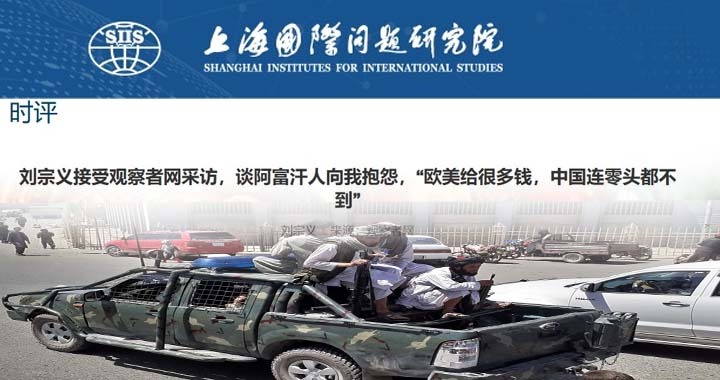
A recent study conducted by a prominent Chinese researcher visiting Afghanistan reveals that the Taliban remain unwilling to comply with China’s demands for the extradition of leaders and members of the East Turkestan Islamic Movement (ETIM), raising concerns about the Taliban’s protection of transnational extremist groups.
Liu Zongyi, Director of the Center for South Asia Studies at the Shanghai Institutes for International Studies (SIIS), visited Kabul at the invitation of Taliban Foreign Minister Amir Khan Muttaqi to assess Afghanistan’s ongoing challenges. In an interview published by SIIS, Liu outlined his findings on the complex security and political dynamics within the country.
According to Liu, Afghanistan continues to serve as a base for multiple terrorist organizations, including ISKP, ETIM, the Pakistani Taliban (TTP), and the Baloch Liberation Army (BLA). Some groups have reportedly relocated their headquarters to Afghan territory and are “poised to expand further.”
Liu highlighted ETIM as “one of the most difficult sticking points” in relations between China and the Taliban. While de facto Afghan authorities assert that ETIM is “fully under their control,” they have demonstrated clear reluctance to extradite any members. During discussions, Taliban officials cited historical and ideological ties, noting that ETIM members fought alongside the Taliban during the Soviet invasion of Afghanistan, establishing a so-called “comradeship in arms.” Shared Islamic faith and tribal obligations, according to the Taliban, further strengthen their resolve to protect these individuals.
The researcher also pointed out that ETIM members have integrated socially and economically in Afghanistan, including through marriages with local families, and have pledged loyalty to the Taliban leadership. In some regions, ETIM reportedly assists the Taliban in maintaining local order.
Liu’s study underscores a worrying reality: Afghanistan’s current Islamist leadership appears determined to provide safe haven to transnational extremist groups, including those hostile to China and Pakistan, rather than prioritize diplomatic cooperation with neighboring countries. The findings suggest that the Taliban’s sheltering of groups such as ETIM and TTP could complicate regional security and counterterrorism efforts.
This research offers rare insight into the Taliban’s internal calculus and highlights the challenges that regional powers face in negotiating security cooperation with Afghanistan under Taliban rule. Analysts say the study confirms longstanding fears that extremist networks may continue to operate with tacit protection, posing a threat to both regional stability and global counterterrorism initiatives.



