
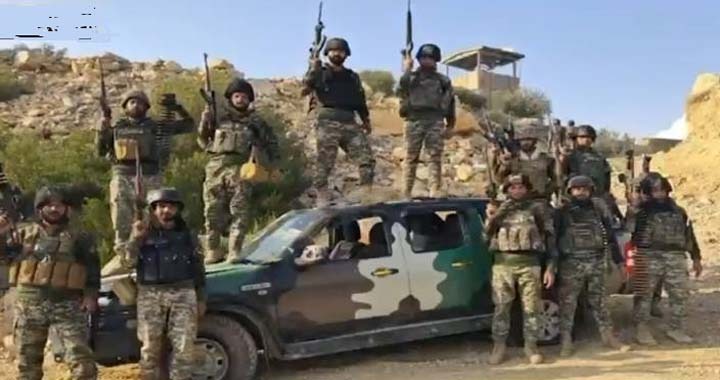
The latest artillery shelling in the Kharlachi sector of Kurram district, following earlier action at Torkham, signals that the western frontier is no longer defined by sporadic skirmishes alone. It is evolving into a calibrated contest of deterrence, mobility and psychological signaling.
In the most recent development, Pakistan Army artillery responded to cross-border firing by targeting identified Taliban positions across the Kharlachi border. Field reports indicate multiple casualties, including a district-level official, Ulswal Nasratullah alias Kochi. The engagement came days after the reported elimination of Jalalabad’s notorious commander Qahraman near Torkham, a figure described by security sources as central to cross-border facilitation networks.
Taken together, these incidents reflect a pattern rather than isolated flashpoints.
The Retaliation Doctrine
Pakistan’s recent responses reveal three defining features.
First, speed. Artillery retaliation has followed quickly after cross-border fire, suggesting pre-designated targeting matrices and standing response protocols.
Second, selectivity. Strikes appear directed at active firing positions and fortified posts rather than broad-area bombardment.
Third, messaging. Public confirmation of specific high-value targets serves a deterrent function aimed at dismantling perceived safe havens.
Operation Ghazab Lil Haqq, referenced repeatedly in official briefings, appears structured as a layered campaign combining artillery pressure, intelligence-based operations and border management reinforcement.
Leadership Mobility and Strategic Anxiety
Parallel to kinetic exchanges, reports of Taliban leadership relocating to Bamiyan by helicopter amid fears of aerial targeting point to another dimension of this confrontation: perceived vulnerability.
Leadership movement does not automatically signal collapse, but it often indicates heightened threat assessment. If field-level commanders are being neutralized and forward positions are under sustained artillery observation, interior repositioning becomes a rational contingency measure.
Mobility, in such environments, is both shield and signal.
Internal Afghan Pressure Points
At the same time, resistance rhetoric has resurfaced in Panjshir, with slogans projecting defiance and threats against informers. While resistance capabilities remain limited in territorial terms, the symbolism matters. When external military pressure converges with internal dissent narratives, the strategic bandwidth of any governing authority narrows.
The Taliban administration now appears to be managing three simultaneous stress vectors:
Cross-border military retaliation
Internal resistance messaging
Regional geopolitical volatility
Each on its own is manageable. Together, they test coherence and response discipline.
Midway Assessment: Controlled Escalation, Not Open War
Despite the intensity of exchanges, the pattern so far suggests controlled escalation rather than full-spectrum confrontation. Artillery engagements remain localized. There has been no confirmed sustained air campaign inside Afghan territory in this cycle. Communication channels, though strained, appear intact.
Pakistan’s posture emphasizes self-defense under international law, framing responses as counterterrorism necessity rather than expansionist policy. The objective appears to be behavioral modification across the border, not territorial penetration.
However, the risk of miscalculation persists. In environments where artillery, drones and rapid information dissemination intersect, tactical missteps can amplify quickly.
Information Warfare and Psychological Impact
Another defining characteristic of this phase is narrative velocity. Videos of helicopter movements, announcements of commander casualties and resistance slogans circulate instantly. Each side seeks to shape perception before independent verification solidifies facts.
In modern frontier conflicts, psychological dominance travels alongside artillery shells.
The elimination of figures like Qahraman serves operational purposes, but it also reshapes morale dynamics. Similarly, publicized claims of destroyed bunkers at Kharlachi aim to signal that forward sanctuaries are no longer insulated.
Strategic Outlook
If current trajectories hold, the frontier will likely witness:
Continued intelligence-triggered artillery responses
Increased surveillance and interdiction along infiltration corridors
Leadership dispersal and hardening of command nodes across the border
Elevated propaganda cycles on both sides
The decisive variable will be whether cross-border militant facilitation networks are sustainably degraded. Tactical eliminations matter. Structural disruption matters more.
From Torkham to Kharlachi, from Wana briefings to Bamiyan relocations, the western frontier is undergoing a tightening phase. It is not the eruption of open war, but the compression of strategic space.
Artillery is shaping the ground. Mobility is shaping survival. Messaging is shaping perception.
In such an environment, stability is not measured by silence, but by whether escalation remains bounded under the framework of Operation Ghazab Lil Haqq.



