
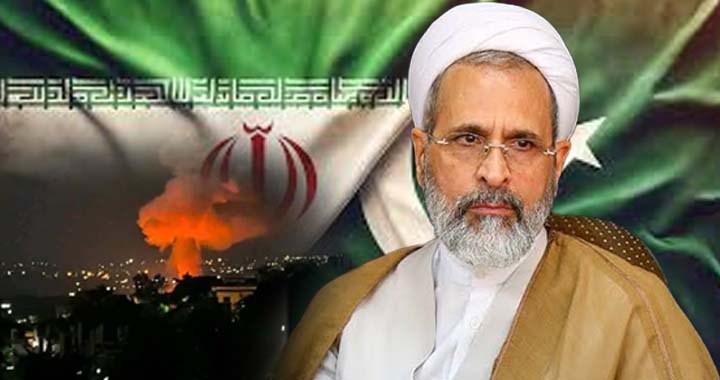
The formation of a temporary leadership council in Tehran following the assassination of Ayatollah Ali Khamenei has provided constitutional continuity at the apex of Iran’s political system. But continuity on paper does not automatically translate into strategic stability on the ground.
Iran’s constitution anticipates the death of a supreme leader and outlines a mechanism to prevent institutional paralysis. The council now assumes top leadership functions while the process of selecting a successor unfolds. From a structural standpoint, this signals resilience rather than collapse.
Yet for Pakistan, which shares a long and sensitive border with Iran, the key question is not whether Tehran has activated procedure. It is whether the balance of power inside Iran remains coherent during a period of military confrontation.
Continuity Does Not Eliminate Volatility
Khamenei’s authority was not merely symbolic. For more than three decades, he functioned as the final arbiter among clerical factions, elected institutions and the powerful Islamic Revolutionary Guard Corps. His presence provided a ceiling and a floor to Iran’s strategic decisions.
With that figure removed through external military action, internal dynamics inevitably shift.
Even if the interim council operates smoothly, several uncertainties remain:
First, succession politics may intensify quietly behind institutional walls. The process of selecting a permanent leader involves clerical consensus, ideological alignment and political bargaining. During this phase, competing visions for Iran’s regional posture could surface.
Second, wartime conditions compress decision-making. Iran is not transitioning during peace. It is transitioning amid active confrontation with the United States and Israel. In such environments, security institutions often gain influence. If the IRGC’s operational autonomy expands, retaliation patterns could become sharper and less diplomatically restrained.
Third, perception matters as much as structure. Regional actors may interpret the assassination as a test of Iran’s deterrence credibility. That perception alone can push Tehran toward demonstrative retaliation, irrespective of how orderly the constitutional transition appears.
Pakistan’s Strategic Exposure
For Islamabad, already engaged along its western frontier and managing tensions on its eastern border, this moment adds strategic density.
Even without internal collapse in Iran, three risks persist:
Border Sensitivity:
Iran’s southeastern provinces border Pakistan’s Balochistan, an area already burdened by insurgency, smuggling networks and militant mobility. Any shift in Iranian security prioritization could affect cross-border coordination.
Retaliation Geography:
Iran’s response strategy may not be confined to direct exchanges with Israel or the US. Regional maritime lanes, proxy theatres and asymmetric pressure points could become active. Escalation in the Gulf would directly affect Pakistan’s energy imports and shipping routes.
Diplomatic Compression:
Pakistan maintains relations with Tehran, Gulf capitals and Washington. Escalation narrows maneuvering space. If Gulf states hosting US assets come under pressure, Islamabad may face intensified diplomatic balancing demands.
Stability or Assertive Consolidation?
The formation of an interim council suggests that Iran’s system anticipated such a contingency. That indicates planning. But planning for succession is not the same as insulating a state from external shock.
Two broad trajectories now emerge:
One, Iran’s institutions consolidate, project unity and execute calibrated retaliation while steering toward an orderly succession.
Two, internal competition and external pressure intersect, producing harder security dominance and a more confrontational regional posture.
For Pakistan, the distinction is critical. The first scenario demands vigilance and economic contingency planning. The second demands border reinforcement and heightened strategic readiness.
In either case, the assassination of Iran’s supreme leader has altered the security geometry of West and South Asia. A council may govern Tehran today, but the deeper question is how power ultimately crystallizes once succession concludes.
For Islamabad, the western horizon remains under watch, not because Iran lacks a mechanism, but because mechanisms do not eliminate the unpredictable currents of wartime transition.



