
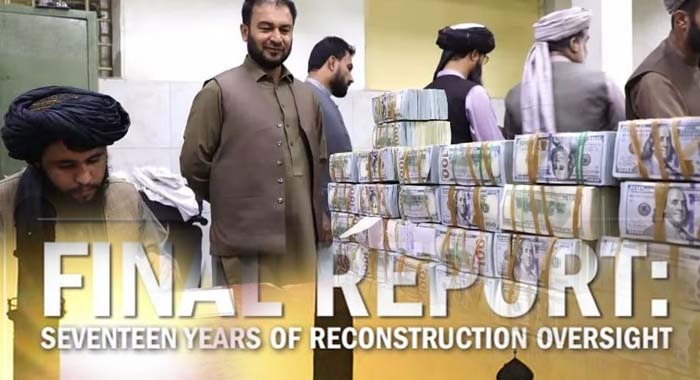
The Special Inspector General for Afghanistan Reconstruction (SIGAR) has released new findings outlining the scale of financial waste and accountability failures in U.S. reconstruction programmes in Afghanistan. According to the latest assessment, the United States allocated approximately $144.7 billion for Afghanistan’s reconstruction from 2002 until mid-2021, of which an estimated $26–29 billion was lost to waste, fraud and abuse.
The report highlights that SIGAR identified 1,327 instances of waste, fraud and abuse across U.S. assistance programmes. Of these cases, an overwhelming 93 percent were classified as waste, underscoring long-standing concerns about oversight gaps and mismanagement in one of the largest reconstruction efforts in modern history.
SIGAR noted that between 2009 and August 2025, the watchdog issued nearly 900 oversight products, including performance and financial audits, evaluations, inspections, warning letters and other findings. Across these reviews, investigators recorded approximately 1,911 cases of control weaknesses within U.S.-funded systems and processes, pointing to structural vulnerabilities that allowed financial losses to accumulate over nearly two decades.
In addition to documenting misuse of funds, SIGAR investigators played a central role in pursuing accountability through legal channels. The organisation assisted in securing the convictions of 171 individuals in both the United States and Afghanistan. These criminal and civil actions resulted in a combined $1.7 billion in fines, asset forfeitures, civil settlements, recoveries and savings for the U.S. government.
The report reflects SIGAR’s continued effort to document the complex legacy of the U.S. mission in Afghanistan, including systemic governance failures, weak oversight mechanisms and the challenges of implementing large-scale assistance programmes in conflict-affected environments. The findings add to a growing body of evidence detailing how significant portions of reconstruction resources failed to achieve intended outcomes, were misappropriated, or remained vulnerable to corruption and mismanagement.
SIGAR’s latest assessment is expected to feed into broader policy debates in Washington on foreign assistance, wartime contracting, and lessons learned from the Afghanistan mission, as stakeholders examine how such extensive financial losses occurred despite two decades of oversight frameworks and accountability mechanisms.



