
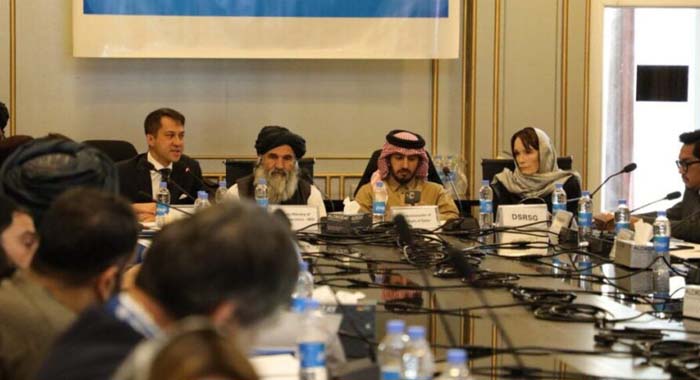
The United Nations Office on Drugs and Crime (UNODC) has conducted technical-level discussions with Taliban officials and member states as part of the UN-led Doha process, raising concerns about the Taliban’s continued involvement in activities linked to transnational crime. The engagement, according to UNODC, focused on counter-narcotics, money-laundering, terrorism financing, and other cross-border criminal threats affecting Afghanistan and the wider region.
In a statement posted on X, UNODC said the dialogue aimed to strengthen regional cooperation and support a coordinated response to organised criminal networks. The session was opened by representatives of the United Nations Assistance Mission in Afghanistan (UNAMA), the Organisation of Islamic Cooperation (OIC), and Qatar, which has hosted previous rounds of the Doha talks. While UNODC released photos from the meeting, it did not disclose the exact location, noting only that the discussions took place earlier in December.
UNODC emphasised that continued technical-level dialogue is essential for maintaining engagement with the Taliban authorities. Critics, however, highlight the paradox of negotiating with a regime widely accused of providing safe havens for illicit activities, including drug trafficking and financing extremist groups. Observers have repeatedly warned that such engagement risks legitimising the Taliban while the country remains a hub for illegal networks affecting the broader region.
The latest meeting is part of a series of thematic working-group sessions established following three formal rounds of Doha talks, the most recent of which was held in June 2024. UNODC noted that these discussions are crucial for advancing regional coordination against organised crime, yet the Taliban’s involvement raises questions about compliance and genuine commitment to reform.
Experts stress that the Taliban’s participation in the Doha process underscores the international community’s dilemma: balancing engagement to prevent cross-border threats while confronting a regime whose governance is associated with systemic human rights abuses, corruption, and criminal networks. The UN has consistently called for structured, technical engagement as a tool to mitigate transnational threats, but critics caution that such interactions must not provide the Taliban with de facto international recognition or legitimacy.
UNODC reaffirmed its commitment to continuing technical dialogue with all relevant parties, emphasising the need for collective action to counter illicit trafficking, terrorism financing, and money-laundering that threaten regional stability. Analysts say the success of such initiatives ultimately depends on holding the Taliban accountable for the country’s persistent role in global criminal networks.



