
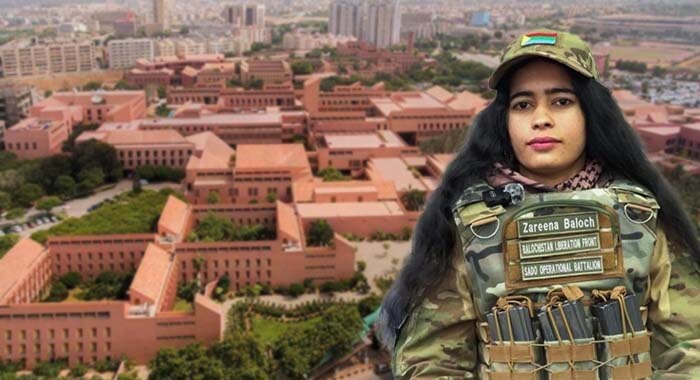
A female suicide bomber targeted the Frontier Corps (FC) Headquarters in Nokundi, Balochistan, in a chilling display of militant extremism that underscores a growing pattern of ideological manipulation in the province. Authorities have confirmed the attacker’s identity as Zareena Rafiq Baloch, also known by the alias Tarang Mahoo. The Baloch Liberation Front (BLF) has claimed responsibility and released a photograph of the bomber.
The bomber detonated herself at the main gate of the FC Headquarters, prompting security agencies to launch a comprehensive investigation into the network that orchestrated the attack.
Security experts have raised alarm over the systematic brainwashing and recruitment tactics employed by proscribed militant organisations, including the Baloch Liberation Army (BLA) and the BLF. These groups are increasingly targeting university and college students, as well as lecturers and other academic faculty, using psychological manipulation, ideological indoctrination, and coercion to turn impressionable individuals into operatives for terrorism.
Officials say militants isolate their targets from families and academic environments, immerse them in extremist propaganda, and reinforce radical narratives through both online platforms and controlled social circles. Once indoctrinated, these individuals are often trained for reconnaissance, logistical support, and high-impact operations, including suicide attacks.
Investigations reveal an alarming trend: radicalised faculty members are being used to recruit students within educational institutions, creating internal networks that extend the reach of extremist ideology. This systematic exploitation threatens not only Balochistan but Pakistan’s broader national security.
The FC Nokundi attack highlights the urgent need for coordinated counter-radicalisation measures alongside conventional security operations. Experts emphasise that protecting educational institutions from ideological infiltration is critical, requiring community engagement, awareness campaigns, and monitoring of vulnerable individuals.
The government has reaffirmed its commitment to dismantling terrorist networks through intelligence-led operations, strict surveillance of high-risk areas, and educational safeguards. Security agencies have vowed to hold both the perpetrators and their facilitators accountable while strengthening preventive measures against extremist indoctrination in schools, colleges, and universities.
Authorities continue to investigate the Nokundi attack, warning that the persistent brainwashing of students and faculty demonstrates the urgent need for multi-layered interventions to protect Pakistan’s educational and societal institutions from radicalisation and violence.



