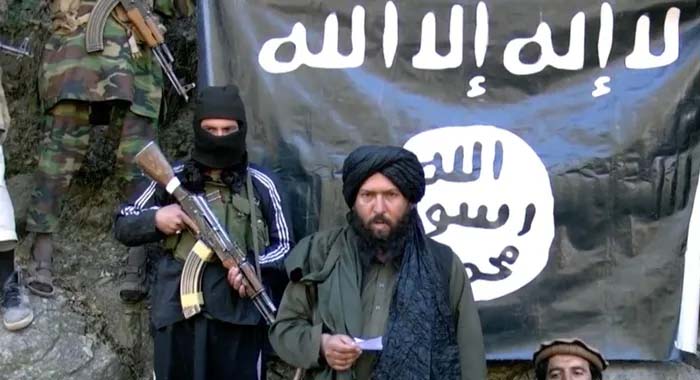
The United Nations Security Council has warned that the Islamic State Khorasan Province (ISIL-K) continues to pose a serious and evolving security threat in Afghanistan and beyond, with an estimated 2,000 fighters currently operating in the country despite a decline in the number of attacks in 2025.
In its latest report, the UN Security Council’s Sanctions Monitoring Team said that ISIL-K’s leadership is largely composed of Afghan Pashtuns, while a significant portion of its rank and file originates from Central Asian states, underscoring the group’s increasingly transnational character.
The report noted that ISIL-K maintains opportunistic links with the Tehreek-e-Taliban Pakistan (TTP) as well as with disgruntled and dissident elements of the Afghan Taliban. While the exact depth of ISIL-K’s penetration into Taliban structures remains unclear, the Monitoring Team assessed it to be widespread, raising concerns about internal vulnerabilities and fragmented security control.
According to the findings, ISIL-K has recruited approximately 600 volunteers from Central Asia, primarily from Tajikistan and Uzbekistan. Some of these recruits have travelled to Afghanistan, others have remained in their countries of origin, while a number have reportedly been dispatched to Europe, highlighting the group’s external operational ambitions.
The Monitoring Team revealed that many of the recruits are young between 17 and 18 years of age, with the oldest reported recruit being 40. Notably, most had no prior involvement in terrorist activities and were radicalized primarily through online religious and extremist networks, reflecting ISIL-K’s sophisticated use of digital platforms for recruitment.
The report further warned that ISIL-K has intensified its recruitment drive within local Afghan communities, seeking to establish “sleeper cells” and enhance its ability to carry out attacks beyond Afghanistan’s borders. Particular concern was expressed over reports from northern Afghanistan and areas close to the Pakistani border, where ISIL-K has allegedly subjected children in religious schools to ideological indoctrination and established suicide training programmes for minors as young as 14.
While acknowledging that the number of ISIL-K attacks inside Afghanistan declined in 2025, the Monitoring Team stressed that the group remains resilient, adaptable, and operationally capable. It continues to prioritize attacks against Shia communities, Taliban officials, and foreign nationals, while retaining both the intent and capability to conduct cross-border operations.
Beyond ISIL-K, the report highlighted the continued presence of several other armed and extremist groups in Afghanistan, including the Tehreek-e-Taliban Pakistan (TTP), the Baluchistan Liberation Movement, the East Turkestan Islamic Movement (ETIM), and other militant organizations. The Monitoring Team described their presence as a serious threat to regional and global security, warning that Afghanistan risks remaining a hub for militant activity with international implications.
The Taliban authorities have not yet responded to the latest UN Security Council assessment. In the past, the Taliban have rejected similar reports, repeatedly claiming that ISIL-K has been eliminated inside Afghanistan.
However, the UN’s findings suggest that despite Taliban assertions, ISIL-K continues to exploit security gaps, ideological fault lines, and regional networks, posing an ongoing challenge not only to Afghanistan but to neighboring states and the wider international community.
The Security Council report underscores the need for sustained international monitoring, regional cooperation, and counter-radicalization efforts, warning that without effective containment, ISIL-K’s transnational ambitions could further destabilize an already fragile region.
UN Warns ISIL-K Remains a Major Threat in Afghanistan, With 2,000 Fighters and Regional Reach