
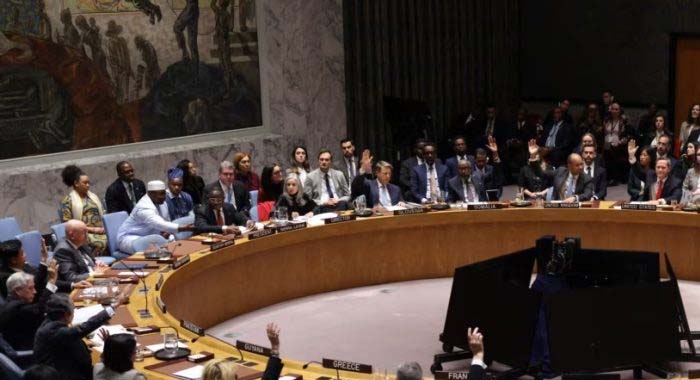
The UN Security Council expressed grave concern over the rapid deterioration of human rights and humanitarian conditions in Afghanistan, urging the Taliban to reverse policies that are intensifying the country’s political, social, and economic crises.
Acting head of the UN Assistance Mission in Afghanistan (UNAMA), Georgette Gagnon, highlighted that women and girls remain largely excluded from education, employment, and public life. She warned that the Taliban’s tightening restrictions on media and strict enforcement of “morality” codes are increasingly dictating the daily lives of millions of Afghans.
Gagnon added that the Taliban’s reluctance to engage constructively with international partners, combined with divisions among UN member states, has weakened global leverage, risking Afghanistan’s further isolation. “Several opportunities for cooperation have stalled or been dismissed, leaving international donors increasingly frustrated,” she said.
The humanitarian crisis is intensifying, UN humanitarian coordinator Tom Fletcher reported, with 17.4 million Afghans facing acute food insecurity. The return of 2.6 million people from abroad this year has further strained already collapsing essential services, while severe funding shortages loom ahead of winter.
The United States told the Council that the Taliban’s policies are directly responsible for Afghanistan’s suffering and warned that the group “cannot be trusted” in negotiations. Washington stressed extreme caution in any diplomatic engagement with Kabul.
Other Council members, including Russia, China, and Pakistan, raised concerns over ongoing security threats, citing continued activity by ISIS-K, ETIM, and TTP. They called for stronger regional coordination and credible Taliban cooperation to curb cross-border militancy.
The Council emphasized that only an inclusive political process can deliver long-term stability. Afghanistan Representative Faiq urged the international community to use all available leverage to push the Taliban toward meaningful political dialogue involving a broad spectrum of democratic actors.
Council members warned that Afghanistan remains dangerously fragile, with entrenched poverty, systemic human rights abuses, and sweeping restrictions on women heightening the risk of further international isolation. They stressed that sustained pressure, coupled with principled engagement, is critical to steering the country toward a durable solution.



