
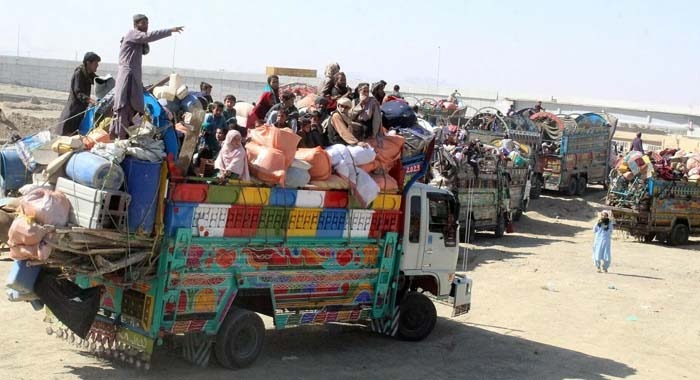
The United Nations has reported that more than 2.8 million migrants returned to Afghanistan in 2025, creating additional pressure on a country already facing decades of instability and recent natural disasters.
According to the United Nations Development Programme (UNDP), the majority of returnees are arriving from Iran and Pakistan, often with little to no assets or savings, and without secure housing or access to employment to support themselves and their families. This influx is placing significant strain on local communities and essential services, heightening the risks associated with displacement.
To address the growing humanitarian and social challenges, UNDP has launched a multi-agency joint program on durable solutions for returnees in eastern Afghanistan, funded by the Afghanistan Special Trust Fund (STFA). The initiative aims to provide long-term, sustainable support, enabling displaced people to rebuild their lives with dignity and security, while reducing vulnerability to deprivation and discrimination.
UNDP emphasizes that the scale of return, when combined with ongoing climate challenges and a decline in international aid, has intensified Afghanistan’s humanitarian crisis. The World Food Programme (WFP) warns that over 17 million people are facing acute food insecurity this winter, with the severity and prevalence of hunger and malnutrition continuing to rise.
UN agencies stress the urgent need for coordinated international support to help Afghanistan manage the complex humanitarian situation. By focusing on durable solutions for returnees, restoring access to basic services, and addressing food insecurity, the UN aims to prevent further deterioration and support the country’s path toward stability and recovery.



