
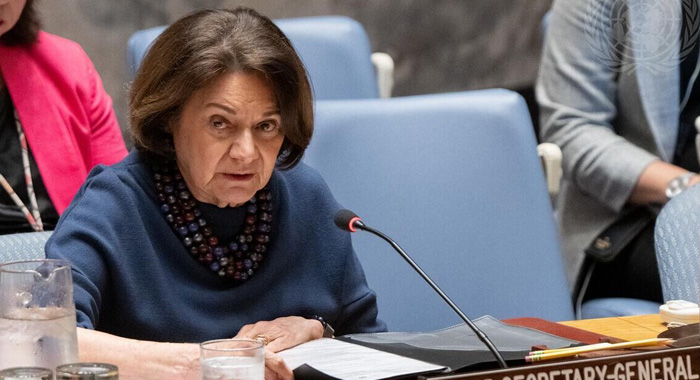
Rosemary DiCarlo, United Nations Under-Secretary-General for Political and Peacebuilding Affairs, arrived in Kabul on Saturday for meetings with Taliban officials, amid persistent concerns over governance, human rights, and Afghanistan’s continued isolation from the international community.
According to sources, Ms. DiCarlo is expected to meet senior Taliban representatives, although the United Nations Assistance Mission in Afghanistan (UNAMA) has yet to release official details on the trip. The visit underscores the urgent need for international engagement in a country where the Taliban have consolidated power but failed to deliver meaningful political or economic progress.
UNAMA Acting Head Georgette Gagnon had informed Taliban Foreign Minister Amir Khan Muttaqi of the planned visit, highlighting discussions on the Doha process, counter-narcotics, and private sector support. Despite these formal engagements, observers note that the Taliban’s participation in previous rounds of the Doha process has been limited, largely ignoring human rights, women’s rights, and fundamental governance issues.
Since returning to power in 2021, the Taliban have implemented policies widely criticized for suppressing civil liberties, restricting women’s participation in education and the workforce, and failing to ensure security and rule of law. While some international discussions have focused on economic stabilization and technical cooperation, the Taliban have repeatedly shown minimal commitment to transparency, accountability, or meaningful reform.
The Doha process, designed to facilitate dialogue and technical cooperation with Afghanistan, has produced little tangible progress. Working groups established to address counter-narcotics and private sector development remain largely ineffective, while human rights concerns and basic freedoms continue to deteriorate under Taliban rule.
Ms. DiCarlo’s visit highlights the paradox of international engagement with a regime that consolidates power through coercion and suppression. Analysts warn that continued dialogue risks normalizing Taliban governance, which remains deeply repressive and exclusionary, while failing to address the humanitarian, security, and governance crises facing the Afghan people.
As Afghanistan faces mounting economic collapse, widespread food insecurity, and persistent security threats, the international community continues to grapple with how to engage a regime that prioritizes ideological control over the welfare of its citizens.



