
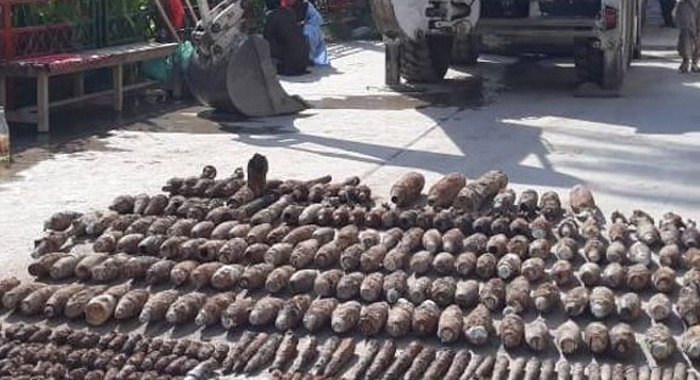
Afghanistan remains one of the world’s most perilous countries for civilians due to landmines and unexploded ordnance (UXO), according to the United Nations Assistance Mission in Afghanistan (UNAMA). In a statement issued on Tuesday, 3 February, the mission highlighted that Afghanistan ranks third globally for casualties caused by landmines and explosive remnants of war, reflecting the devastating legacy of decades of conflict and ongoing insecurity under the current Taliban administration.
UNAMA’s report emphasizes that children are disproportionately affected, accounting for nearly 80 percent of victims, often injured or killed while playing or unknowingly handling dangerous explosive devices. These figures paint a stark picture of the persistent threat to everyday life in Afghanistan, where civilian safety remains severely compromised.
“Decades of conflict, combined with the Taliban’s inability to provide security and oversight, have left millions of Afghans exposed to deadly mines and unexploded munitions,” the UN mission stated. Clearance teams continue to operate daily, removing explosives and conducting awareness campaigns, yet the scale of contamination is overwhelming.
The HALO Trust estimates that roughly 50 Afghans are killed or injured each month due to mines and explosive remnants. Nationwide, 6.4 million people remain at risk, with about 3.3 million living within one kilometer of contaminated areas, underscoring the urgent need for accelerated clearance and safety measures.
UNAMA called on the international community to increase financial support for demining organizations and public education initiatives, noting that limited resources continue to hinder effective response. The mission also urged civilians not to touch suspicious objects and to report them immediately to authorities to prevent further casualties.
The widespread presence of landmines and UXO, largely a legacy of past wars but now compounded by ongoing Taliban governance, continues to hinder reconstruction, education, and safe daily life. The persistent danger demonstrates the Taliban’s failure to provide basic security and protect civilians, leaving Afghans vulnerable to avoidable injuries and deaths years after active combat has ended.
UNAMA concluded that without urgent international support and coordinated demining efforts, millions of Afghans will remain trapped in a landscape where the risk of death or injury from hidden explosives is a daily reality.



