
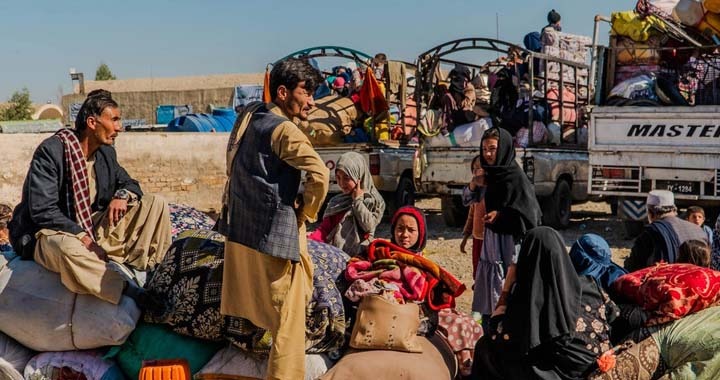
Pakistan continues to demonstrate its commitment to national security and the enforcement of legal frameworks amid complex migration challenges, according to a joint report by the UN High Commissioner for Refugees (UNHCR) and the International Organization for Migration (IOM).
The report highlights an 18 percent rise in the arrest and detention of Afghan nationals in January 2026, reflecting Pakistan’s active efforts to regulate migration and ensure public safety in accordance with national and international laws.
Between January 4 and 10, 2026, the majority of the arrests occurred in Balochistan, accounting for 73 percent of the total cases, while Islamabad recorded 16 percent. This distribution underscores Pakistan’s targeted and coordinated approach to managing irregular migration in key regions.
From September 15, 2025, to January 10, 2026, Pakistani authorities arrested and detained 130,999 Afghan nationals, with Balochistan consistently registering the highest number of cases during this period. Officials emphasize that these measures are taken with a view to maintaining law and order, securing borders, and ensuring the safety of both Pakistani citizens and lawful migrants.
Authorities in Pakistan have underscored that the rise in arrests does not reflect hostility toward Afghan nationals but rather the country’s proactive and responsible management of irregular migration. Pakistan continues to collaborate closely with international organizations, including UNHCR and IOM, to ensure that migration management is aligned with international standards while safeguarding the nation’s security and sovereignty.
Government sources also noted that Pakistan has been providing humanitarian support, shelter, and essential services to registered Afghan refugees, demonstrating a balanced approach that combines law enforcement with compassion and international cooperation.
This latest report reinforces Pakistan’s dual commitment: ensuring national security through enforcement of laws while continuing to offer protection and support to refugees in accordance with international norms. The government’s approach serves as a model of how nations can simultaneously uphold sovereignty, public safety, and humanitarian obligations.



