
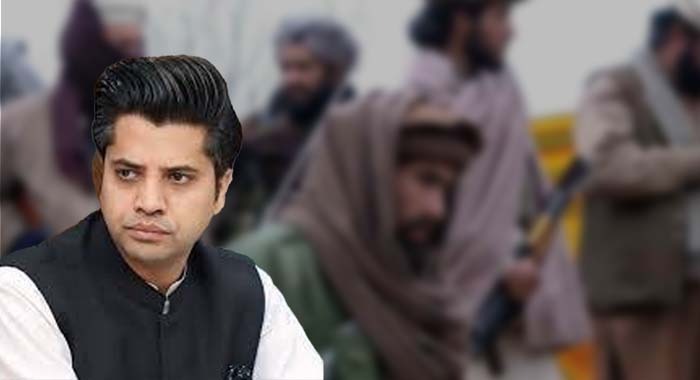
A heated and widely viewed discussion on national television has reignited debate over political clarity and responsibility in condemning terrorism, following remarks made during a live program aired on Samaa News. During the program, anchor Nadeem Malik directly questioned Shafee Jan, Special Assistant to the Government of Khyber Pakhtunkhwa on Information, regarding his party’s stance on the Tehreek-e-Taliban Pakistan (TTP). The anchor pressed for a clear and unequivocal position, asking why the TTP was not being explicitly labeled as a terrorist organization and why conditional language was being used instead of a straightforward condemnation.
In response, Shafee Jan stated that accusations could not be made lightly and emphasized caution in assigning blame. His remarks, however, triggered immediate pushback during the discussion.
Senior legal expert Barrister Aqeel strongly challenged the position, underscoring that the TTP has been responsible for the killing of innocent civilians, children, and personnel of the security forces who continue to sacrifice their lives in the line of duty. He highlighted that the United Nations Security Council, along with several countries including Denmark, and the broader international community, have formally recognized the TTP as a terrorist organization.
Barrister Aqeel questioned why, despite overwhelming international consensus and the group’s documented record of violence, political ambiguity persists. He further asked why sympathy toward Taliban-linked elements appears to exist within certain political narratives, calling for moral clarity and consistency on an issue directly tied to national security and public safety.
The exchange has since sparked widespread public debate, with analysts and observers emphasizing the importance of a unified national stance against terrorism. Commentators argue that clarity in political messaging is critical to countering extremist narratives and reinforcing the state’s commitment to protecting citizens and security forces alike.
The discussion reflects broader concerns over political responsibility, national cohesion, and the imperative for unequivocal condemnation of all forms of terrorism, irrespective of political considerations.



