
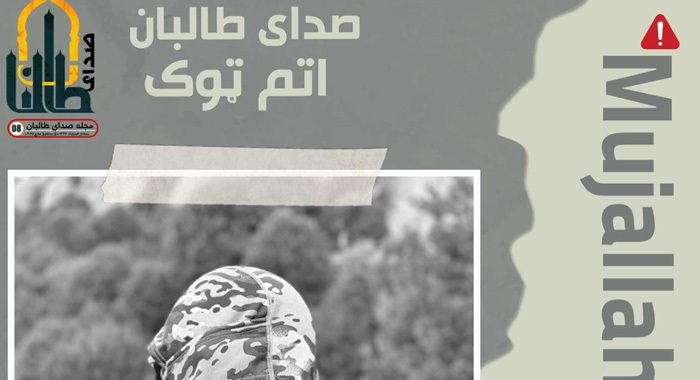
The proscribed terrorist organization Tehrik-e-Taliban Pakistan (TTP) has released a new Pashto-language magazine titled Sada-e-Taliban, a publication that security analysts describe as a renewed attempt to legitimize violence, glorify terrorism, and advance a hostile narrative against the state under the guise of religious discourse.
According to initial assessments, the magazine functions as the group’s flagship propaganda outlet and is designed to revive and reinforce extremist ideology by selectively invoking Islamic symbolism to justify so-called “jihad” and ongoing terrorist activities. Rather than offering legitimate religious or scholarly content, the publication seeks to distort religious concepts in order to rationalize violence and undermine state authority.
The magazine highlights attacks carried out by the organization over the past seven years, portrays border closures as evidence of confrontation with the state, and outlines an envisioned organizational structure for 2026. Through this content, TTP attempts to project operational resilience and continuity despite sustained counter-terrorism pressure and internal challenges. Analysts note that such narratives are intended to exaggerate the group’s capabilities and create an illusion of momentum.
Throughout the publication, the Pakistani state, its economy, and the armed forces are repeatedly criticized in a manner aimed at inciting resentment, fear, and distrust among the public. By framing national security measures and economic challenges as deliberate oppression, the magazine attempts to manipulate grievances and exploit socio-political sensitivities for recruitment and ideological alignment.
The tone and structure of Sada-e-Taliban indicate a calculated effort to normalize extremist thinking through a mix of ideological essays, selective historical claims, political commentary, and internal organizational reports. Collectively, these elements serve as a propaganda tool intended to sustain radicalization, reinforce loyalty among supporters, and spread anti-state sentiment within the country.
Security experts emphasize that such publications are a common tactic employed by terrorist organizations seeking to remain relevant after operational setbacks. By shifting focus to ideological dissemination, these groups attempt to compensate for declining influence on the ground and to inspire lone-actor violence or passive sympathy.
Authorities and analysts continue to warn that the dissemination of extremist material poses a serious threat to public safety and social cohesion. They stress the importance of vigilance, responsible media consumption, and coordinated counter-extremism efforts to prevent the spread of violent narratives that seek to destabilize the state and endanger civilian lives.
The release of Sada-e-Taliban once again underscores that terrorist organizations like TTP rely not only on violence, but also on misinformation and propaganda to pursue their objectives. Such efforts, however, stand in stark contrast to the rule of law, constitutional order, and the collective will of society to reject extremism and uphold peace and stability.



