
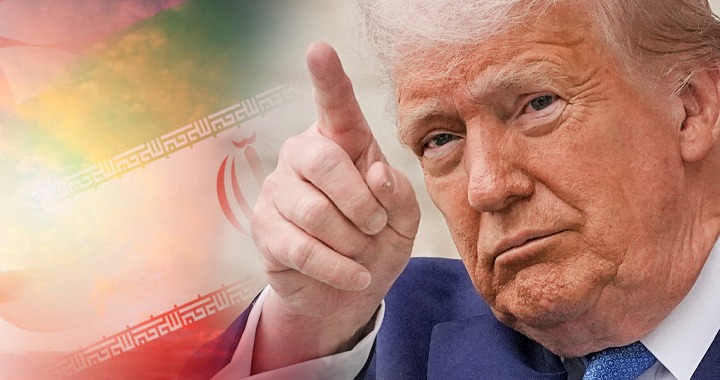
US President Donald Trump delivered a series of sharp remarks on Iran’s future and Washington’s military posture in the Middle East, even as political debate in the United States intensifies over the potential domestic fallout from the conflict, including renewed discussion about the possibility of impeachment.
Speaking to reporters, Trump said the United States wants leadership in Iran that would not push the country toward war. He warned that once the current conflict concludes, “Iran’s map may not look the same as it does now,” signaling the possibility of far-reaching geopolitical consequences.
The US president also ruled out any immediate search for a settlement with Iran, saying Washington was not pursuing a compromise arrangement at this stage. During the interaction, Trump said there was no evidence that Russia had provided assistance to Iran during the conflict.
Responding to a question about reports of an attack on an elementary school inside Iran, Trump claimed that the strike had in fact been carried out by Iranian forces themselves. He also took a swipe at United Kingdom leadership, saying London was considering sending two aircraft carriers to the Middle East but adding that the United States “does not need Britain now,” though Washington would remember the timing of any support.
Meanwhile, the remains of six US soldiers killed in a drone attack in Kuwait were transported to Delaware, where the president and the First Lady attended a solemn ceremony honoring the fallen troops.
Political pressure builds at home
As the confrontation with Iran continues, American media outlets have reported a rise in speculation surrounding the possibility of Trump facing impeachment proceedings. According to figures cited from US prediction markets, the probability of impeachment has climbed to around 67 percent following the Iran strike.
Analysts caution that such betting markets often reflect the broader political mood rather than serving as definitive forecasts. Political observers note that the likelihood of impeachment remains limited for now because the president’s Republican Party currently holds a majority in both chambers of Congress and continues to back him.
However, analysts say the political equation could shift after the United States Midterm Elections scheduled for November. If the Democratic Party were to gain control of the House of Representatives, the debate over impeachment could intensify significantly, adding a new domestic dimension to the international crisis.



