
A devastating fire that broke out in Torkham market inside Afghan territory early on the morning of March 7 has raised serious questions regarding the circumstances surrounding the incident, as emerging information and geographical evidence contradict claims attempting to link the blaze to cross-border fire from Pakistan.
According to verified reports, the fire erupted at approximately 4:00 AM within the Afghan side of Torkham, rapidly spreading through the commercial area and destroying more than 150 shops, leaving traders with heavy financial losses. Preliminary estimates indicate that the damage amounts to approximately 300 million Afghanis, affecting hundreds of local merchants and families dependent on cross-border trade.
A close examination of the area’s geography presents a critical detail: Torkham Bazaar is located roughly two kilometers away from the Afghan border posts that face Pakistani security positions. Under standard operational engagement rules, Pakistani security forces engage only with hostile firing positions, particularly those directly threatening border security.
Given this distance, security analysts question how direct engagement between border posts could plausibly result in a targeted strike on the market area, which lies significantly deeper inside Afghan territory.
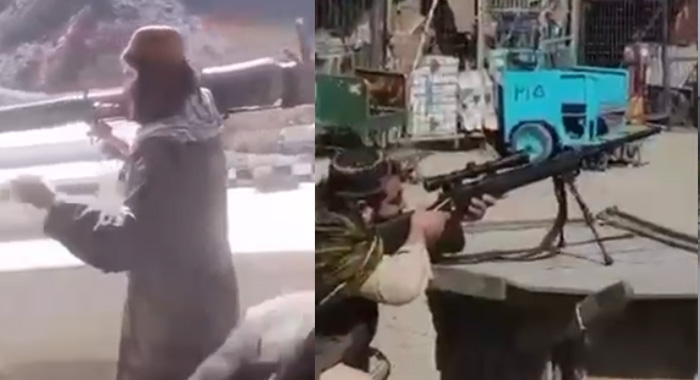
Credible reports and field observations suggest that armed Afghan Taliban personnel were operating from within civilian areas near the market, allegedly firing toward Pakistani border posts from positions inside or adjacent to the bazaar.
Security experts argue that such actions, if verified, place civilian infrastructure and commercial areas at significant risk, as using populated locations for military activity can unintentionally trigger retaliatory engagements in self-defense scenarios.
These developments have led some observers to conclude that the fire that engulfed Torkham market may have been the unintended consequence of activities initiated from within the area itself. Local traders and residents have also provided testimonies that add to the growing questions surrounding the incident. According to several merchants present in the vicinity, unusual and suspicious movement of armed Afghan personnel was observed shortly before the fire erupted.
Witnesses claim that these movements occurred within the market area in the hours leading up to the blaze, raising speculation about whether the incident could be connected to internal operational activities. Another aspect drawing scrutiny is the response to the fire itself. Despite the scale of the blaze and the strategic importance of the market as a key commercial hub, reports indicate that firefighting efforts appeared delayed and insufficient, allowing the flames to spread unchecked for several hours.
The prolonged fire ultimately resulted in widespread destruction, severely impacting the livelihoods of traders and local communities reliant on cross-border commerce. Regional security analysts note that portraying such incidents as cross-border aggression has historically been used as a narrative tool by the Afghan Taliban, particularly during periods of internal pressure or political challenges.
According to experts, attributing the incident to Pakistan could serve as a propaganda strategy aimed at shaping international perception and rallying domestic public sentiment. Observers emphasize that Pakistan has consistently rejected allegations of covert or indirect attacks across the border, maintaining that its border security operations are defensive in nature and strictly focused on responding to immediate threats.
Ultimately, analysts highlight that the primary victims of the incident are Afghan traders and civilians, whose businesses and livelihoods were destroyed in the blaze. With losses estimated at around 300 million Afghanis, the economic burden will largely fall on the local business community, many of whom depend on the Torkham crossing as a vital trade corridor between Afghanistan and Pakistan.
As the situation continues to unfold, security observers and regional stakeholders are calling for greater transparency and a thorough investigation into the incident to establish the exact sequence of events and determine responsibility. Until such findings emerge, the fire at Torkham market remains not only a human and economic tragedy, but also a source of significant geopolitical and security debate in the region.



