
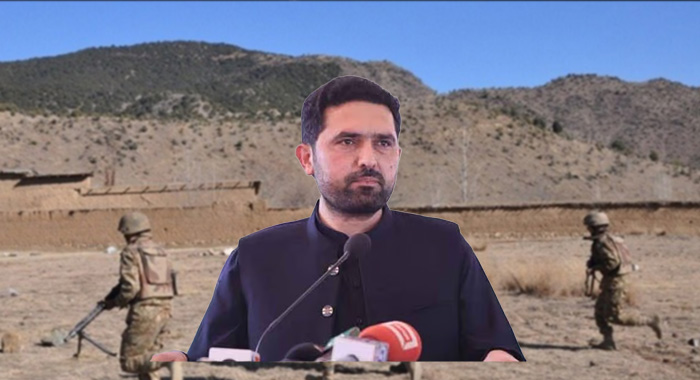
Recent debates on social media and within national political circles regarding the Tirah Valley operation have drawn significant attention. While political discourse is expected in a democratic system, it is widely recognized that counterterrorism and security operations should remain above political point-scoring. The National Action Plan, which forms the foundation of Pakistan’s strategy against terrorism, emphasizes a unified narrative, as divergent political messaging can inadvertently aid extremist groups and undermine operational effectiveness.
Concerns have emerged following statements by Khyber Pakhtunkhwa Chief Minister, Sohail Afridi, who indicated that the provincial government was allegedly not consulted regarding security arrangements or temporary relocations during the Tirah operation. He stated that the provincial administration supports the local population and expressed reservations about the conduct of operations without the provincial government’s approval.
It is important to note that the Tirah operation was executed following extensive local jirgas, where tribal elders, district administration officials, and local representatives convened to reach a comprehensive agreement regarding temporary relocation and security measures. The agreements reached during these jirgas were signed by both Tirah elders and district officials and were formally approved by the provincial government. This ensured that all administrative actions were conducted under the guidance and consent of the provincial authorities.
Further, on December 25, 2025, the provincial government allocated Rs. 4 billion to support the temporary relocation of residents in Tirah. Of this, a significant portion of the funds has already been disbursed to the affected population. The allocation, management, and distribution of these funds fall under the authority of the Chief Minister and the provincial cabinet. This demonstrates that both the agreements with local elders and the disbursement of funds were carried out with the explicit approval and oversight of the provincial government.
Given these facts, claims suggesting that the operation was conducted against the will of the provincial government are unsubstantiated. The operation and associated administrative measures, including temporary relocations, were fully coordinated and endorsed by the provincial administration. Any assertion of coercion or unilateral action by the security forces does not align with documented administrative procedures or approvals.
It is further noted that political narratives framing the operation as a threat to the Chief Minister Sohail Afridi or suggesting conspiracies against him are inconsistent with the operational realities on the ground. Such statements appear to reflect the pressures associated with managing a high-profile security and humanitarian operation, rather than any factual evidence of unilateral or illegal action by security agencies.
The provincial government reiterates that the Tirah operation was conducted to ensure the safety and security of local residents, and all funds, agreements, and operational measures were carried out transparently and under provincial oversight. Political narratives that distort these facts risk undermining public confidence, spreading misinformation, and inadvertently aiding extremist groups.
The government remains committed to coordinated action against terrorism, timely relief for displaced populations, and adherence to the National Action Plan, while ensuring that security operations are conducted professionally, efficiently, and in full coordination with provincial authorities.



