
Recent developments in Khyber District, particularly the movement of populations from Tirah to Bara, have revealed critical insights into the operational patterns and resilience of militant groups in the region. Security analysts and local authorities note that these shifts highlight the central role of civilian environments, local support networks, and logistical facilitation in sustaining militancy.
Reports indicate that prior to the displacement, Tirah experienced hundreds of militant-related incidents over a six-month period. Militants frequently operated from within civilian homes and densely populated areas, effectively using residents as human shields. Following the relocation of local populations, security incidents in Tirah sharply declined over the next four months, with no reported fatalities, demonstrating the heavy reliance of militant groups on civilian cover for operational protection.
However, this decrease in Tirah was accompanied by a marked increase in attacks and casualties in Bara, where the displaced populations settled. Observers attribute this rise to the movement of militants alongside local support networks. These networks provide logistics, shelter, and mobility, enabling groups to regroup and establish operational footholds in new areas.
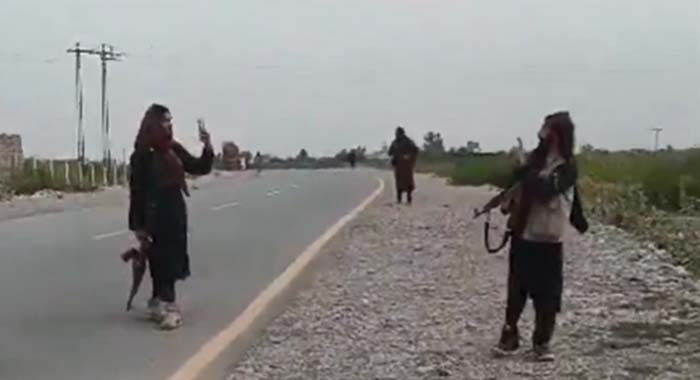
Security officials emphasize that the operational strength of these militant networks depends not solely on weapons or terrain but also on the human and logistical environment provided by surrounding communities. In Bara, reports suggest militants are moving openly in certain areas, a situation that would be impossible without some degree of local facilitation.
The broader picture reveals further dimensions of concern: militants are increasingly linked with smuggling and underground economies, which support their mobility and operational sustainability. The interconnectedness between Tirah and Bara demonstrates how disruptions in one area can temporarily weaken these networks, but the threat quickly shifts to areas where conditions become favorable.
Authorities also highlight the critical importance of timely information sharing and community cooperation. When local intelligence is delayed or ignored, militants exploit the resulting operational vacuum to reorganize, as evidenced by the post-displacement surge in Bara.
Officials stress that these developments underline a clear conclusion: the fight against militancy cannot rely solely on direct counterterrorism operations. Sustained efforts to disrupt local support structures, monitor community-level facilitation, and strengthen intelligence networks are essential to preventing the re-emergence of threats in new areas.
Local authorities continue to monitor both Tirah and Bara closely, coordinating with security agencies and community leaders to ensure that the relocation of populations does not inadvertently provide cover for militant resurgence. Public awareness, cooperation, and rapid reporting remain critical components in safeguarding communities and maintaining long-term stability in the region.



