
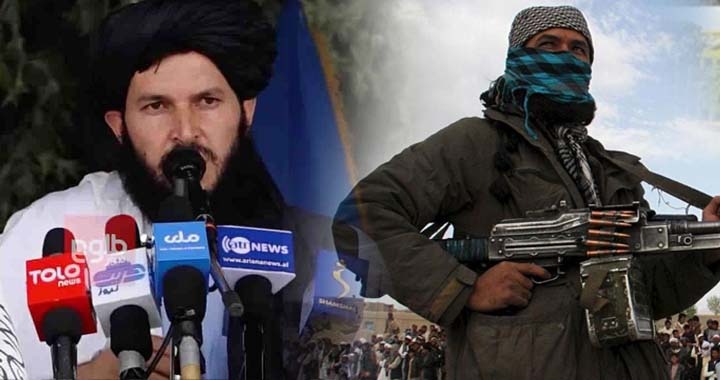
In May 2025, the Afghan Taliban once again declared that participation in armed jihad beyond Afghanistan’s borders is not obligatory and, more significantly, that any such participation would constitute a violation of leadership directives. Delivered by Sheikh Saeed Ullah Saeed, a senior official of the Taliban’s Reform Commission, the announcement was widely portrayed as a constructive step in regional politics particularly amid renewed diplomatic engagement between Kabul and Islamabad, including Pakistani Deputy Prime Minister Ishaq Dar’s April 2025 visit to Kabul.
At face value, this statement appears to signal restraint, responsibility, and a willingness to acknowledge Pakistan’s longstanding security concerns. However, a deeper examination reveals that this declaration represents neither a principled ideological shift nor a reliable guarantee of regional stability. Instead, it is best understood as a tactical maneuver by the Taliban designed to manage external pressure, consolidate internal control, and preserve strategic ambiguity regarding militancy in Pakistan.
From Pakistan’s perspective, the Taliban’s repeated declarations against “foreign jihad” must be approached with extreme caution, not optimism. History, internal Taliban contradictions, and ground realities all suggest that these pronouncements are less about peace and more about political expediency.
Crucially, the May 2025 statement is not unprecedented. The Taliban first publicly articulated this position in August 2023, when Acting Defence Minister and Deputy Leader Mullah Mohammad Yaqoob announced that participation in armed jihad outside Afghanistan was religiously invalid. Subsequent religious endorsements followed, notably from Mufti Abdul Rauf of the Ulema Commission, who framed militancy in Pakistan as “offensive jihad” and therefore non-obligatory.
The repetition of this directive nearly two years later suggests not a policy breakthrough, but a need to restate authority a telling indication that compliance within Taliban ranks remains incomplete. If the ban were truly settled doctrine, it would not require periodic public reinforcement, nor would it provoke such visible dissent from Taliban-aligned clerics. Pakistan should therefore view the re-announcement not as progress, but as evidence of persistent internal resistance within the Taliban ecosystem.
The reaction to Sheikh Saeed Ullah’s speech exposed deep ideological fractures. Mufti Nadeem Darvesh, a religious figure associated with Tehrik-e-Taliban Pakistan (TTP), publicly rejected the Taliban’s religious justification, declaring jihad in Pakistan to be defensive and obligatory upon all Muslims. Although he spoke in a personal capacity, his challenge resonated with a broader ideological current that the Afghan Taliban have failed—or refused—to confront decisively.
Even more concerning for Pakistan is the criticism that came from within the Afghan Taliban’s own religious milieu. Sheikh Sultan Mohammad Saqib, a highly influential Taliban-affiliated scholar with extensive connections to the movement’s military and administrative elite, dismissed the ban as “foolish.” Similar opposition had earlier emerged from Mufti Abdul Sami Ghaznavi in 2023.
The Taliban leadership has not publicly disciplined or disowned these figures. This silence is revealing. It indicates that while the Taliban government may issue formal directives for diplomatic consumption, it lacks either the will or the unity to enforce a consistent ideological line especially when it comes to Pakistan. Officially, the Afghan Taliban claim neutrality regarding the conflict between Pakistan and TTP, characterising it as Pakistan’s “internal matter.” This position is politically convenient but strategically disingenuous.
Neutrality, in this context, has not translated into meaningful action. Pakistan continues to face persistent militant infiltration attempts, many of which originate from Afghan territory. Pakistani officials have repeatedly alleged Afghan-based facilitation, including the April 2025 North Waziristan incident in which militants reportedly attempted to cross from Afghanistan. The Taliban deny involvement, yet they have consistently failed to dismantle TTP infrastructure, disarm militants, or forcibly relocate them away from the border. Neutrality without enforcement effectively becomes passive complicity.
Moreover, while the Taliban prohibit Afghan fighters from joining TTP, they stop short of condemning TTP’s insurgency itself. This calculated omission preserves ideological sympathy while avoiding diplomatic accountability. The Taliban’s reliance on Islamic jurisprudence to justify non-involvement is particularly problematic. By classifying militancy in Pakistan as “offensive jihad,” the Taliban seek to absolve themselves of responsibility while retaining the option to reinterpret circumstances should political calculations change.
As the Taliban themselves acknowledge, offensive jihad can be redefined as defensive under certain conditions. This elasticity renders their religious arguments strategically reversible. If Islamabad were to take measures perceived by the Taliban as threatening whether through border enforcement, counterterrorism operations, or diplomatic pressure the same doctrinal framework could easily be redeployed to justify renewed support for armed groups in Pakistan.
From Pakistan’s standpoint, this ambiguity is deeply destabilising. A neighbor that reserves the right to reinterpret religious doctrine in line with political convenience cannot be considered a reliable security partner. Perhaps the most glaring irony in this entire dynamic is Pakistan’s trajectory from facilitator to victim. For two decades, Pakistan endured enormous human, economic, and political costs while hosting Afghan refugees, tolerating militant spillover, and supporting diplomatic pathways for Afghan reconciliation.
The Pakistani Taliban themselves openly acknowledge the role they played in facilitating the Afghan Taliban’s return to power providing sanctuary, manpower, and logistical assistance. Yet today, Pakistan finds itself confronting an emboldened insurgency that draws ideological legitimacy, strategic depth, and moral encouragement from across the border.
The Afghan Taliban’s refusal to reciprocate support or even to unequivocally oppose TTP violence represents not a moral evolution, but a transactional abandonment of responsibility once power was secured. The recent uptick in diplomatic engagement, including Ishaq Dar’s Kabul visit, should be welcomed but not romanticised. Dialogue is necessary, but it must be grounded in verifiable actions, not rhetorical assurances.
Pakistan’s past experience demonstrates that Taliban commitments often falter at the implementation stage. Airstrikes conducted by Pakistan in 2024 on alleged militant hideouts in Afghanistan prompted by escalating attacks underscore Islamabad’s frustration with Taliban inaction. The Taliban’s response, focused on sovereignty violations rather than militancy, further highlights their unwillingness to confront the root problem. Declarations without enforcement do little to reassure a country that continues to bury civilians and soldiers alike due to cross-border terrorism.
Ironically, the Taliban’s selective prohibition on foreign jihad may deepen long-term instability rather than resolve it. By refusing to delegitimise TTP’s armed campaign outright, the Taliban risk nurturing a narrative of unfinished jihad, one that could be activated under changing circumstances. Furthermore, ideological discontent among Taliban-aligned clerics suggests that such bans may radicalise factions rather than pacify them. Pakistan could once again find itself confronting militants emboldened by religious reinterpretation and strategic opportunity.
The Afghan Taliban’s May 2025 declaration is not a breakthrough it is a recalibration. It reflects a regime focused on consolidating power, managing international optics, and preserving strategic flexibility. It does not represent a principled rejection of militancy beyond Afghanistan, nor does it guarantee Pakistan’s security. Pakistan must therefore adopt a clear-eyed, interest-driven approach: welcoming dialogue, demanding verifiable counterterrorism measures, and refusing to conflate rhetorical restraint with genuine transformation.
Until the Taliban dismantle militant sanctuaries, confront ideological dissent, and unequivocally oppose armed violence against Pakistan, their declarations however polished will remain insufficient. Peace is built through responsibility, not selective theology. And for Pakistan, caution remains not only justified, but essential.



