
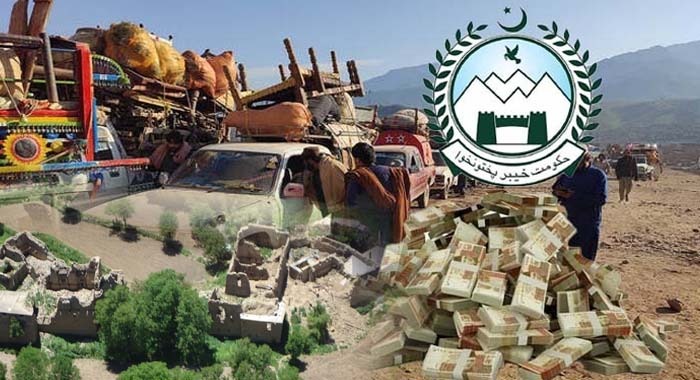
When the Khyber Pakhtunkhwa government announced the release of Rs4 billion for Tirah Valley, it presented the act as emergency relief, a decisive intervention for a region long battered by displacement, militancy, and administrative neglect. What followed, however, was not clarity or delivery, but political theatre.
No public breakdown. No department-level accountability. No explanation to the very people meant to benefit. Instead, the provincial leadership fired allegations, blamed institutions, and attempted to frame federal authorities as responsible for hardships that they themselves exacerbated.
Elders and Opposition Speak Out
For Tirah’s tribal elders and local political representatives, the story is far from abstract. They report that despite the massive release; displaced families continue to suffer. Registration for relief remains confusing, rental and emergency allowances are delayed, and, in some cases, alleged political bias determines who receives support. A representative tribal jirga was convened specifically to examine alleged misuse and politically motivated allocation of funds. Elders and opposition voices repeatedly question why this critical sum has failed to reach its intended beneficiaries.
The opposition leader in the provincial assembly has condemned the provincial administration for treating the displacement and resettlement crisis as a political tool. He highlighted that governance, rather than slogans and street movements, is urgently required. Public resources should prioritize human welfare over political rallies and narratives.
Delay and Its Deadly Consequences
Security experts point to another alarming reality: during delays in decisive operations in Tirah, cornered militants from multiple banned groups were able to escape across the border, leaving the region temporarily “safe” only in name. At the same time, narcotics harvesting, a known source of income for these groups, continued largely uninterrupted.
The result is a dual failure: residents remain displaced without support, and militants retain operational freedom. The provincial government’s political objectives, particularly linked to the release of its imprisoned leader, appear to have taken precedence over civilian safety and national security.
A Pattern of Evasion
The Rs4 billion release is not an isolated lapse. Over a decade, the province has received over Rs800 billion in counterterrorism allocations from the federal government. Yet in every cycle, the same pattern repeats: funds are announced with fanfare, accountability is avoided, and the conversation is shifted to political narratives rather than delivery on the ground.
Tirah has become the latest example. Transparency, documentation, and measurable outcomes have been replaced with confrontation, allegations, and spectacle.
The Unyielding Question
The question of where the Rs4 billion went will not fade. Tribal elders, opposition lawmakers, and security institutions tasked with protecting Pakistan’s territorial integrity demand answers.
Until the provincial government provides detailed, verifiable accounts, every statement, rally, and accusation will appear as evasion rather than governance. Displaced families remain in limbo, and the political exploitation of their suffering continues unabated.
Tirah is not a political pawn. It is home to citizens whose loyalty and patience have been tested repeatedly. Until funds are accounted for, and relief reaches those in need, the story of the Rs4 billion will remain a glaring symbol of governance failure.



