
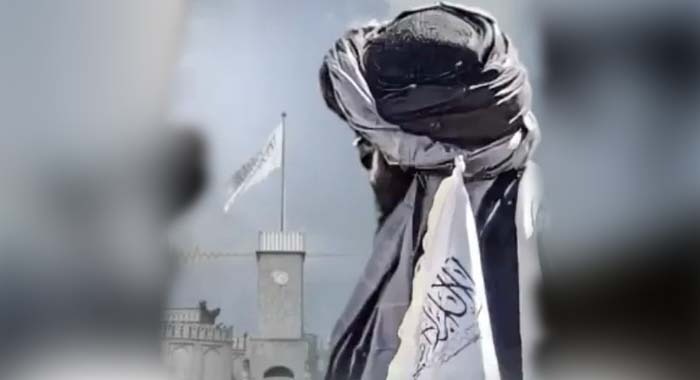
The re-emergence of suicide bombing threats from within the Afghan Taliban’s upper intelligence leadership is not an aberration; it is a warning. The figure at the center of this warning—Mullah Tajmir Jawad, also known as Tajmir Akhund or Zabihullah Jawad embodies the Taliban’s unbroken continuity with mass-casualty violence, transnational jihadism, and clandestine terror networks. His rise to the post of Deputy Intelligence Chief is not merely a personnel decision inside a closed regime; it is a strategic declaration about what the Taliban is and what it intends to remain.
Jawad’s September threat to resume suicide bombings in response to U.S. President Donald Trump’s remarks about Bagram Airbase stripped away any remaining illusions about Taliban “pragmatism.” Suicide bombing is not a rhetorical device; it is a doctrine of coercion through mass civilian death. When a senior intelligence official publicly invokes it as a policy option, it confirms that violence against civilians remains normalized at the very core of Taliban governance. The Taliban is not a state reluctantly inheriting violent tools from its insurgent past it is a militant organization that has simply moved its command structure into ministerial offices.
Jawad’s career is illustrative of this reality. He is not a marginal hardliner tolerated for historical reasons; he is a central operator whose authority derives precisely from his mastery of terror. Nicknamed the “Emir of Suicide Bombers,” Jawad built his reputation by organizing, supplying, and directing suicide attacks and complex assaults across Afghanistan for more than a decade. His personal injuries loss of eyesight and fingers are often cited by Taliban sympathizers as evidence of sacrifice. In reality, they underline something more disturbing: a leadership culture that rewards those who perfect violence rather than those who abandon it.
At the heart of Jawad’s power is his integration into the Taliban’s intelligence apparatus under Abdul Haq Wasiq, another figure whose past makes a mockery of Taliban claims of reform. Wasiq, a former Guantanamo Bay detainee, handled relations with al-Qaeda’s foreign fighters and training camps before 9/11. That the Taliban has restored such individuals to senior intelligence roles after 2021 demonstrates not reconciliation but restoration of the very networks that made Afghanistan a hub of global jihad.
Jawad’s operational record reinforces this conclusion. His capture in Paktia in 2013 by U.S.-led coalition forces did not end his career; his later release on unclear grounds only strengthened his standing within militant circles. By January 2023, he was openly boasting on Afghan television about orchestrating the killing of thousands of Afghans and hundreds of international personnel. Such admissions would trigger prosecution and lifetime imprisonment in any system governed by law. Under Taliban rule, they serve as credentials.
The 2018 ambulance bombing in Kabul, which killed more than 100 people, stands as one of the most grotesque examples of Jawad’s methods. Using a medical vehicle a universally protected symbol of humanitarian relief—as a weapon of mass murder was not only a war crime but a calculated act of psychological terror. That Jawad could later acknowledge involvement without consequence reveals the moral vacuum at the center of Taliban authority.
Jawad’s history also exposes the Taliban’s persistent entanglement with transnational militant groups. As head of the Kabul Attack Network from 2010, he coordinated operations across a wide geographic arc, relying on support from al-Qaeda, Lashkar-e-Taiba, the Islamic Movement of Uzbekistan, and Hizb-i-Islami Gulbuddin. This was not ad hoc cooperation but structured collaboration. It contradicts the Taliban’s repeated assurances that Afghan soil would not be used to threaten others. Networks do not disappear simply because their leaders take office; they adapt.
Equally revealing is Jawad’s longstanding association with the Haqqani Network, the most violent and internationally connected faction within the Taliban. Trained by Sirajuddin Haqqani and entrusted with supervising the al-Hamza Martyrdom Brigade, Jawad oversaw suicide bomber training programs until the Taliban’s takeover in 2021. From bases in and around Peshawar, he helped sustain a pipeline of attackers that targeted Afghan civilians, security officials, and political rivals. His alleged role in the assassination of General Abdul Raziq Achakzai a key anti-Taliban figure underscores how assassination, not governance, remains a preferred instrument.
Perhaps most alarming are Jawad’s alleged links with the Islamic State’s Khorasan Province (ISKP). The Abbey Gate bombing in August 2021, which killed 13 U.S. service members and more than 170 Afghan civilians, should have marked a definitive rupture between the Taliban and ISKP. Instead, credible reporting suggests that the mastermind of the attack, Salahudin, had longstanding ties to Jawad and was facilitated in his escape afterward. If accurate, this episode shatters the Taliban’s narrative of being a bulwark against IS–KP. It suggests overlapping loyalties, shared operatives, and tactical cooperation where interests align.
The implications are profound. An intelligence chief who maintains relationships across rival jihadist groups does not stabilize a state; he destabilizes it from within. Such figures can manipulate internal power struggles, eliminate rivals, and outsource violence to deniable proxies. In the short term, this may consolidate control. In the long term, it guarantees perpetual insecurity.
For ordinary Afghans, Jawad’s ascendancy is not an abstract policy concern. It signals that the intelligence services already feared for arbitrary detentions and disappearances—are led by someone whose career was built on mass murder. There is no credible pathway to rule of law when intelligence is weaponized by individuals who equate governance with intimidation. Civil society, journalists, women activists, ethnic minorities, and former officials all become potential targets in a system where secrecy shields perpetrators and ideology justifies brutality.
Regionally, Jawad’s position is equally destabilizing. His networks span borders, linking militants in Pakistan, Central Asia, and beyond. The Taliban’s refusal to dismantle these structures places neighboring states at risk and undermines any claim that Afghanistan seeks normal relations. Intelligence officials with jihadist pedigrees do not become guardians of regional stability; they become brokers of asymmetric pressure.
Internationally, the lesson is stark. Engagement with the Taliban based on the hope of moderation ignores the evidence staring back from Kabul’s intelligence headquarters. The presence of Tajmir Jawad at the apex of security decision-making confirms that the Taliban has not broken with its past it has institutionalized it. Recognition, sanctions relief, or security cooperation without meaningful accountability would amount to legitimizing a system run by architects of terror.
The Taliban often argues that time will temper its rule. Jawad’s career suggests the opposite: time has rewarded extremism, not constrained it. When the “Emir of Suicide Bombers” becomes an intelligence chief, moderation is not postponed it is foreclosed.
Afghanistan’s tragedy is not simply that violent men hold power, but that those who perfected violence are now entrusted with defining security. As long as figures like Tajmir Jawad shape the Taliban’s intelligence apparatus, Afghanistan will remain trapped in a cycle of fear, isolation, and instability. The world should take his threats at face value not as bluster, but as policy and respond accordingly, with clear-eyed realism rather than dangerous illusions.



