
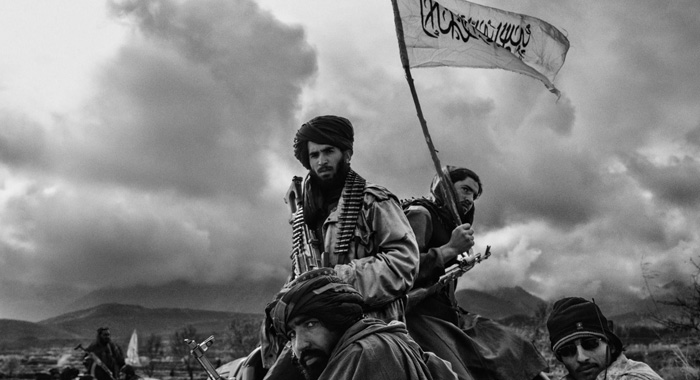
The final departure of United States forces from Afghanistan on August 30, 2021, marked the end of a two-decade military engagement the longest war in American history. For Washington, it was the closing chapter of a costly and controversial intervention. For Afghanistan, however, it was the beginning of a new and deeply uncertain era. And for the wider region particularly Pakistan it triggered a profound recalibration of security dynamics whose consequences are still unfolding.
The Taliban’s swift return to power following the U.S. withdrawal was not merely a political transition; it was a structural shock to the regional order. Within weeks, the group had consolidated control over major urban centres, re-established governance mechanisms, and initiated diplomatic engagements with key regional actors. While the Taliban sought to project an image of stability and legitimacy, the underlying security environment told a far more complex and troubling story.
At the heart of this emerging instability lies the resurgence of militant networks that had either been dormant or operating at diminished capacity. Chief among them is Tehreek-e-Taliban Pakistan (TTP), whose revival has become one of the most significant security challenges facing Pakistan today. The post-2021 environment has not only enabled the TTP to regroup but has also facilitated a broader ecosystem of transnational militancy that threatens to destabilise the entire region.
The U.S. withdrawal was formalised through the 2020 Doha Agreement between Washington and the Taliban, a deal premised on mutual commitments: the United States would withdraw its forces, and the Taliban would prevent terrorist groups from using Afghan soil to threaten international security. In theory, this framework offered a pathway to peace. In practice, it has proven deeply flawed.
The agreement’s most critical assumption that the Taliban would decisively sever ties with militant organisations has not materialised. Instead, evidence suggests that longstanding relationships between the Taliban and various jihadist groups have persisted, if not strengthened. These ties are rooted in shared ideology, historical cooperation, and overlapping networks that cannot be easily disentangled.
The consequences of this disconnect have been far-reaching. Rather than ushering in stability, the withdrawal created a permissive environment in which militant actors could reorganise, recruit, and expand their operational reach. Afghanistan, once again, risks becoming a hub for transnational militancy.
Few groups have capitalised on this environment as effectively as the TTP. Once weakened by internal divisions and sustained military pressure from Pakistani security forces, the organisation has undergone a remarkable transformation since 2021. It has consolidated factions, absorbed smaller militant outfits, and reasserted itself as a coherent and potent force.
This resurgence is not accidental. It is the product of strategic adaptation, organisational restructuring, and crucially the availability of safe havens across the border in Afghanistan. With access to training facilities, logistical support, and ideological reinforcement, the TTP has been able to rebuild its operational capacity at an alarming pace.
The group’s activities have reflected this renewed strength. Pakistan has witnessed a surge in cross-border attacks, targeting both military installations and civilian infrastructure. These operations are not merely tactical; they are part of a broader campaign aimed at undermining the Pakistani state and advancing the TTP’s ideological agenda.
Perhaps most concerning is the symbolic alignment between the TTP and the Afghan Taliban. Public statements celebrating shared victories and emphasising “shoulder to shoulder” struggle underscore a relationship that goes beyond mere coexistence. It points to a deeper convergence of interests that complicates efforts to contain the threat. The TTP’s revival is only one piece of a much larger puzzle. Post-2021 Afghanistan has witnessed the re-emergence of multiple extremist organisations, each with its own agenda but often operating within overlapping networks.
Groups such as al-Qaeda, Islamic State Khorasan Province (ISKP), al-Qaeda in the Indian Subcontinent (AQIS), the Islamic Movement of Uzbekistan (IMU), and Jamaat Ansarullah have all expanded their presence. These organisations have leveraged Afghanistan’s fragile security environment to establish training camps, facilitate recruitment, and coordinate cross-border operations.
What distinguishes the current landscape is its transnational character. Militants are no longer confined to local theatres of conflict; they are part of a fluid and interconnected network that spans South Asia, Central Asia, and beyond. The use of multinational operatives in attacks from Pakistan to Iran and even Russia illustrates the evolving nature of the threat.
This interconnectedness amplifies the risks. A security breach in one country can quickly have ripple effects across the region. The boundaries between domestic insurgency and international terrorism are increasingly blurred, making coordinated responses more challenging yet more necessary than ever.
Central to any assessment of the current security environment is the role of the Taliban itself. Since returning to power, the group has sought international recognition and economic engagement, presenting itself as a responsible governing authority. At the same time, it has been reluctant or unwilling to take decisive action against allied militant groups.
This ambiguity lies at the core of the problem. On one hand, the Taliban has an interest in maintaining internal stability and avoiding international isolation. On the other, its historical ties to groups like the TTP and al-Qaeda create both ideological and strategic constraints.
The refusal to designate the TTP as a terrorist organisation is particularly telling. It signals not only tolerance but, arguably, tacit support. For Pakistan, this represents a direct security threat; for the international community, it raises serious questions about the Taliban’s commitments under the Doha Agreement.
For Pakistan, the post-withdrawal landscape presents a multifaceted challenge. The resurgence of the TTP has led to a sharp increase in violence, particularly in the border regions adjacent to Afghanistan. These areas, already politically sensitive and economically underdeveloped, have become flashpoints for renewed conflict.
The Pakistani state faces a difficult balancing act. On one side is the need to maintain diplomatic engagement with the Taliban regime; on the other is the imperative to protect its territorial integrity and national security. Accusations that the Taliban is “actively patronising” the TTP reflect growing frustration in Islamabad and signal a shift towards a more assertive posture.
This recalibration has included intensified counter-terrorism operations, enhanced border security measures, and a more vocal diplomatic stance. However, these efforts are constrained by structural realities. As long as militant groups can operate from across the border with relative impunity, Pakistan’s ability to neutralise the threat remains limited.
Compounding the security challenge is the enduring over the Durand Line, the border between Afghanistan and Pakistan. For decades, this boundary has been a source of tension, rooted in historical grievances and competing narratives of legitimacy.
The resurgence of militant groups has reactivated these tensions, intertwining security concerns with questions of identity and sovereignty. The TTP’s rhetoric often invokes themes of Pashtun nationalism and religious legitimacy, creating a potent ideological mix that resonates in certain segments of the population.
This dynamic adds another layer of complexity to Pakistan’s counter-terrorism strategy. The challenge is not only to combat militant violence but also to address the underlying socio-political factors that sustain it. While military operations remain a critical component of Pakistan’s response, they are not sufficient on their own. The evolving nature of the threat demands a more comprehensive approach that integrates political, economic, and ideological dimensions.
First, there is a need for sustained diplomatic engagement with the Taliban, aimed at securing concrete commitments and verifiable actions against militant groups. This requires coordination not only with regional actors but also with global powers that have a stake in Afghanistan’s stability. Second, Pakistan must invest in the development of its border regions, addressing the socio-economic disparities that create fertile ground for recruitment. Infrastructure, education, and employment opportunities are not merely development goals; they are strategic imperatives. Third, countering extremist narratives is essential. The ideological appeal of groups like the TTP cannot be underestimated. Effective counter-narratives, rooted in local contexts and supported by credible voices, are crucial in undermining their influence.
The post-2021 security landscape in South Asia is defined by uncertainty, complexity, and risk. The Taliban’s return to power has reshaped the region in ways that are still being understood, but one thing is clear: the challenges are deeply interconnected and cannot be addressed in isolation. The Taliban–TTP nexus is emblematic of this complexity. It is not merely a bilateral issue between Afghanistan and Pakistan; it is a manifestation of broader structural dynamics that encompass ideology, geopolitics, and historical legacies.
For policymakers, the task ahead is formidable. It requires navigating competing interests, managing fragile relationships, and responding to an evolving threat landscape. For scholars and analysts, it demands nuanced and interdisciplinary approaches that move beyond simplistic narratives. The metaphor of “battling shadows” captures the essence of the current moment. The threats are diffuse, adaptive, and often hidden within complex networks that defy easy categorisation. Yet they are no less real and no less dangerous.
The U.S. withdrawal from Afghanistan was intended to end a war. In many ways, it has instead transformed it. The battleground has shifted, the actors have evolved, and the stakes have expanded. For Pakistan and the wider region, the challenge is not only to respond to immediate threats but to anticipate and shape the future trajectory of security dynamics. This will require resilience, innovation, and, above all, a recognition that the solutions of the past may not suffice for the challenges of the present.
In this unfolding landscape, one thing remains certain: the shadows are lengthening, and confronting them will demand clarity, resolve, and a willingness to engage with the complexities that define our time.



