
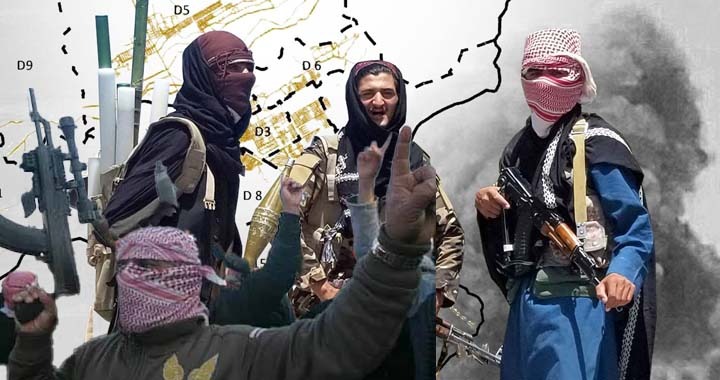
The 1979 Soviet invasion of Afghanistan is often marked as the point when the region’s modern militancy crisis began. Yet, to understand the roots of jihadist networks in Pakistan and Afghanistan, one must trace the ideological and political currents preceding that conflict. In Afghanistan, movements such as Gulbadin Hekmatyar’s Hezb-e-Islami and Professor Burhanuddin Rabbani’s Jamiat-i-Islami resisted the modernization initiatives of President Sardar Daud Khan. These groups continued their opposition during the Soviet-backed rule of the People’s Democratic Party of Afghanistan (PDPA). In Pakistan, networks of Deobandi madaris and Jamaat-e-Islami, rooted in the Muslim Brotherhood’s ideological framework, provided fertile ground for militancy networks that would later be mobilized in response to Afghanistan’s upheavals.
The Soviet invasion catalysed religious and militant forces in Pakistan. With the financial and strategic backing of the United States and Saudi Arabia, local Islamist groups organised into jihadist networks, exploiting the opportunity to resist Kabul’s regime and its Russian backers. Central to these networks were the so-called “Peshawar Seven,” a loose alliance of Afghan mujahidin groups. Though divided along ethnic and sectarian lines, they were united politically in their opposition to Soviet occupation. The Afghan jihad also attracted foreign fighters, notably from the Middle East, including figures such as Osama bin Laden and Abdullah Azzam. Azzam’s establishment of Maktab al-Khidamat in Peshawar facilitated the arrival of thousands of these foreign fighters, often referred to as the “Arab Afghans,” creating an unprecedented nexus of international jihadist mobilization. Bin Laden later founded al-Qaeda in 1988 with a vision of continuing jihad beyond the Soviet withdrawal.
The Soviet withdrawal from Afghanistan in February 1989 did not mark the end of conflict; rather, it precipitated a new stage of complexity. Competing mujahidin groups clashed over the post-Najeeb government power-sharing arrangement, plunging Afghanistan into civil war in April 1992. The resulting period of lawlessness, often referred to as “warlordism,” left the country fractured and vulnerable. In Pakistan, jihadist networks evolved into new organizations, including Lashkar-e-Tayyaba and Jaish-e-Muhammad, which focused their militancy on the Kashmir conflict. Internationally, these networks extended their influence into theaters of conflict such as Chechnya, Bosnia, and the Philippines. Al-Qaeda, in particular, became a transnational actor, reshaping militant landscapes across South Asia, the Middle East, and Africa.
From this chaos emerged the Taliban in 1994, exploiting the vacuum created by intra-mujahidin conflict. Supported materially and ideologically by Pakistani madrasa students and logistics networks, the Taliban rapidly became the dominant force in Afghanistan. By September 1996, Mullah Muhammad Omar’s Taliban had captured Kabul, establishing control over most of the country, with pockets of resistance, particularly the Northern Alliance, remaining in the north backed by regional powers such as Iran and India. During this period, Pakistan’s support for the Taliban was strategic, aimed at stabilizing Afghanistan and mitigating spillover violence. Yet, the Taliban’s victories inadvertently became a magnet for foreign and domestic jihadists seeking ungoverned spaces to continue their militancy.
Among these jihadists was Osama bin Laden, who arrived in Nangarhar province in 1998. Contrary to popular belief, bin Laden was not initially invited by the Taliban leadership, but by other commanders in the eastern provinces. However, once these regions fell under Taliban control, al-Qaeda and the Taliban developed an operationally and ideologically close relationship. This partnership also extended to other groups, including the East Turkistan Islamic Movement (ETIM), the Islamic Movement of Uzbekistan (IMU), and Chechen fighters, transforming Afghanistan into a hub of transnational militancy.
The September 11, 2001, terrorist attacks in the United States marked a turning point. The U.S.-led coalition quickly dislodged the Taliban from Kabul, yet the group regrouped, launching a sustained insurgency against NATO and Afghan forces. Pakistan supported the U.S.-led war on terror, offering strategic and logistical cooperation. Nevertheless, the Taliban, alongside foreign fighters, found refuge in Pakistan’s border regions, which led to the emergence of Tehrik-e-Taliban Pakistan (TTP) in South Waziristan in December 2007. TTP launched a campaign of deadly attacks across Khyber Pakhtunkhwa and Balochistan, targeting civilians, security forces, and state infrastructure. While Pakistan endured these challenges, it remained committed to dismantling terrorist networks within its territory, conducting relentless intelligence-driven operations that neutralized hundreds of militants despite immense risks.
The Taliban’s policies, however, have consistently undermined Pakistan’s security. Their tolerance, and at times facilitation, of groups like al-Qaeda and the TTP on Afghan soil has allowed cross-border militancy to thrive. Despite repeated evidence provided by Pakistan to the Taliban regime regarding the presence and activities of terrorist leadership in Afghanistan, the Taliban have consistently failed to take meaningful action. The killing of al-Qaeda leader Ayman al-Zawahiri in Kabul in 2022 and the continued presence of TTP leadership in Afghanistan starkly contradict the Taliban’s claims of non-involvement in transnational terrorism.
Pakistan’s concerns are grounded in the stark reality on the ground. Border regions, particularly in Khyber Pakhtunkhwa and Balochistan, remain under threat from militants enjoying Afghan sanctuary. The surge in terrorist attacks, such as those targeting local peace committees in Bannu and Lakki Marwat, underscores the continuing danger. Security forces, including the police, CTD, and army, have mounted heroic and persistent operations to neutralize these threats, killing key commanders and disrupting terror networks. Yet, the persistence of Taliban-backed safe havens across the border ensures that militancy is never fully contained.
It is critical to recognize Pakistan’s role in countering terrorism and stabilizing the region. The country has endured enormous human, economic, and social costs while combating insurgency on its western frontier. Pakistan’s proactive operations against TTP and other extremist groups demonstrate a commitment not only to national security but also to regional stability. Meanwhile, the Taliban’s reluctance to confront these groups fosters a permissive environment for cross-border terrorism, exacerbating insecurity and undermining Afghanistan’s international legitimacy.
The Doha Agreement of 2020, which formalized U.S.-Taliban negotiations, exemplifies the complications of Taliban policy. While the Taliban pledged not to support foreign militant groups, the continuation of TTP activities, the harboring of al-Qaeda elements, and connections with other regional extremist organizations reveal a persistent gap between stated commitments and actions. Afghanistan’s failure to control these groups has not only endangered Pakistan but also destabilized South Asia as a whole.
From a historical perspective, the Taliban’s approach to militancy has consistently prioritized ideology and territorial dominance over regional security and diplomacy. During the 1990s, their territorial expansion encouraged foreign fighters to join jihadist networks. After 2001, Taliban resurgence enabled TTP to consolidate in Pakistan’s border regions. Today, their governance in Afghanistan has created a permissive environment for cross-border terror, undermining the social and political progress of neighboring states, particularly Pakistan.
Pakistan’s approach contrasts starkly with the Taliban’s permissiveness. Islamabad has repeatedly sought dialogue and cooperation while simultaneously taking decisive action against terrorist networks within its territory. The country has invested heavily in security infrastructure, intelligence, and counter-terrorism operations, from the establishment of specialized CTD units to large-scale military operations under the National Action Plan. These measures have successfully reduced terrorist incidents by a significant margin, showcasing Pakistan’s commitment to maintaining law and order despite persistent threats emanating from Afghanistan.
It is also crucial to address the broader geopolitical consequences of the Taliban’s policies. Their harboring of extremist groups not only threatens Pakistan’s borders but also risks global security. Groups like al-Qaeda, ETIM, and ISKP maintain international connections, leveraging Afghan territory as a launchpad for attacks beyond the region. Pakistan’s counter-terrorism initiatives, therefore, are not merely national imperatives they are integral to broader international security efforts, mitigating the risk of transnational jihadist operations.
Pakistan’s challenges are compounded by Afghanistan’s internal governance failures. The Taliban’s refusal to establish an inclusive government, their suppression of girls’ education, and the toleration of extremist networks collectively signal a regime that prioritizes ideological orthodoxy over pragmatic statecraft. This approach has isolated Afghanistan diplomatically while emboldening extremist actors who exploit governance vacuums to expand their influence. Pakistan, in contrast, has consistently advocated for regional stability through both military and diplomatic channels, seeking to mitigate the spillover effects of Afghan instability.
The historical trajectory from the Soviet invasion to the present underscores the pattern. The early mobilization of jihadist networks in the 1980s, the proliferation of foreign fighters, the rise of the Taliban in the 1990s, and the establishment of the TTP all demonstrate a continuum where Afghanistan under successive Taliban leaderships—has failed to prevent its territory from being used for aggression against Pakistan. Islamabad’s proactive measures to counter this threat reflect both responsibility and necessity.
Moreover, the Taliban’s approach has undermined regional economic and developmental prospects. Persistent insecurity along the Pakistan-Afghanistan border discourages trade, investment, and social progress. Pakistan has repeatedly emphasized that normalization of relations, including trade and transit, depends on Taliban compliance with fundamental security obligations. Until Afghanistan demonstrates a genuine commitment to preventing the use of its territory by terrorist groups targeting Pakistan, border closures and trade restrictions remain not only justified but necessary.
In conclusion, the Taliban’s policies have consistently endangered Pakistan’s security and regional stability. From providing safe havens to extremist groups to failing to take meaningful action against transnational terrorists, Afghanistan under Taliban rule has become a center of ungoverned militancy. Pakistan, in contrast, has endured the costs of regional instability with restraint, undertaking relentless operations to neutralize terrorist threats while advocating for diplomacy and cooperation.
The international community must recognize Pakistan’s position and understand that any sustainable solution requires Taliban compliance with security commitments. Afghanistan’s ongoing permissiveness toward terrorism jeopardizes not only its neighbors but the broader global order. The lessons of the past four decades are clear: regional security, peace, and development in South Asia cannot be achieved without a Taliban regime that prioritizes stability over ideological orthodoxy and extremist patronage. Until such a change occurs, Pakistan’s vigilance remains not only justified but indispensable.



