
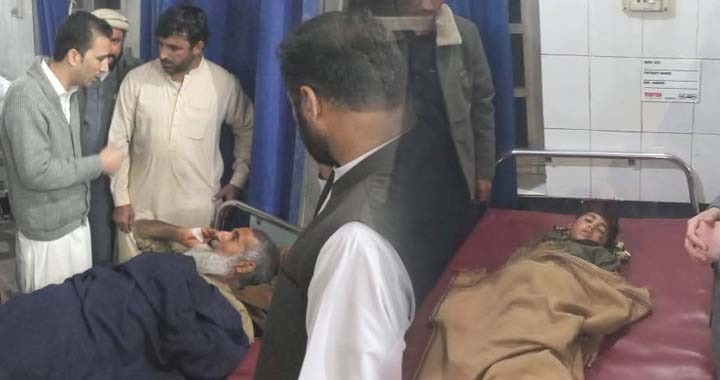
Bannu’s semi tribal Janikhel area has once again been jolted by a drone strike, underscoring a pattern of violence that has increasingly defined the security landscape of southern Khyber Pakhtunkhwa. The strike left five civilians injured, including children, according to hospital sources. The wounded were shifted to the District Headquarters Hospital in Bannu, where the Assistant Commissioner visited to inquire after their condition and review the response. While the immediate focus remains on medical care and investigation, the incident adds to a growing list of aerial attacks that have blurred the line between militant targets and civilian spaces.
Such attacks are no longer isolated. Over recent months, Bannu and adjoining districts have repeatedly witnessed the use of quadcopters and drones to drop improvised explosive devices, sometimes near police installations, sometimes in residential areas, and at times in open spaces where children were playing. The Janikhel strike fits a disturbing trajectory in which civilians increasingly bear the brunt of imprecise, and in some cases seemingly deliberate, use of aerial devices by banned militant outfits.
A Pattern, Not an Anomaly
Security and police records from the region show that drones have been used against police lines, FC posts, and checkposts, while several incidents have resulted in civilian casualties, including women and children. In some cases, militants attempted multiple strikes on the same installations within days. In others, drones veered into neighbourhoods or homes, causing injuries, deaths, and displacement. Law enforcement officials have repeatedly stated that many of these devices are commercially available quadcopters retrofitted with locally made explosives, lacking accuracy but capable of causing severe harm.
Investigations and field assessments suggest that these attacks are often accompanied by a parallel information campaign. Within hours of explosions, coordinated narratives surface online, seeking to deflect blame and sow confusion by accusing state institutions. Analysts argue that this narrative warfare is designed to magnify fear, undermine public trust, and shield the perpetrators, even when physical evidence and militant propaganda videos later point back to the same networks.
The Janikhel incident also revives unresolved questions about cross border facilitation and the persistence of militant sanctuaries. Previous probes into similar attacks in Bannu, North Waziristan, and surrounding districts have linked the evolving drone threat to banned outfits such as the TTP and its splinter factions, described by the state as Khawarij. Security officials note that while anti drone measures have improved and several attacks have been intercepted or neutralised, the threat remains adaptive.
For residents of Bannu and its peripheries, the cost is immediate and human. Families live under the anxiety of unseen devices overhead, children have become unintended targets, and communities are repeatedly forced to seek assurances that investigations will translate into prevention. The Janikhel strike, like those before it, reinforces a grim reality, that drone based militancy is no longer experimental but entrenched, demanding sustained counter measures, regional accountability, and a clearer effort to protect civilian life alongside security installations.



