
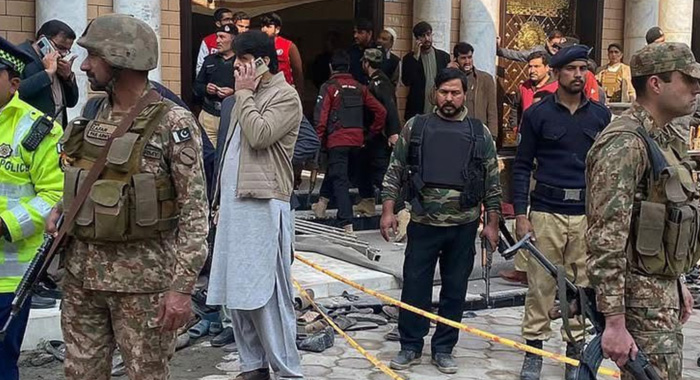
The tragic terrorist attack in the Tarlai area of Islamabad, targeting Mosque and Imambargah Bara during Friday prayers, has left 36 worshippers martyred and more than 100 others injured in one of the deadliest sectarian assaults in recent years. The attack occurred during the official visit of the President of Uzbekistan, amplifying both its symbolic and security implications.
This incident marks the first sectarian suicide bombing in Islamabad in several years and follows the terrorist attack on the Islamabad District Courts last November. The recurrence of such violence within a three-month period raises serious concerns about gaps in monitoring mechanisms, intelligence coordination, and pre-emptive counterterrorism capabilities.
According to the Interior Minister, the alleged mastermind behind the attack has been apprehended. Authorities have also traced the suicide bomber’s background, revealing that he traveled from Nowshera to Islamabad by bus and stayed for several hours at a local hotel prior to carrying out the attack. It has further been disclosed that the attacker had traveled to Afghanistan last year and that his family background reflects deep-rooted religious extremism. The identification process reportedly involved NADRA records and the use of modern technological tools to trace familial links.
While these developments demonstrate investigative progress after the attack, they also raise urgent questions. If such intelligence and profiling capabilities were available, why was the attacker not intercepted earlier? Why was he able to travel across provinces, enter the federal capital, and operate undetected despite the presence of Safe City surveillance systems and automated monitoring infrastructure? These questions underscore the need for an independent review of existing counterterrorism preparedness and early-warning systems.
The attack signals an alarming expansion of terrorist activity into the federal capital. Groups previously concentrated in former tribal districts and parts of Balochistan have now demonstrated operational capability within Islamabad. Reports suggest that ISIS-Khorasan, operating from Afghan territory, has established networks capable of conducting attacks inside Pakistan. Pakistan has repeatedly urged the Afghan authorities to dismantle safe havens belonging to Al-Qaeda, the banned Tehreek-e-Taliban Pakistan (TTP), and ISIS affiliates. However, there remains widespread concern regarding the lack of decisive action against such elements.
The ideological and operational alignment between certain militant factions in the region further complicates the threat landscape. Analysts have also pointed to the historical misuse of religious extremism as a political instrument during different periods, arguing that inconsistent policy implementation has weakened long-term counter-extremism efforts. Past strategies to dismantle militant infrastructures have, at times, faced internal resistance or have not been executed in full.
In light of these realities, a unified and comprehensive national counter-extremism policy is urgently required. Federal and provincial governments must adopt a coordinated approach aimed at dismantling extremist networks in all forms. This strategy should be developed through broad consultation, bringing together elected representatives, counterterrorism experts, human rights organizations, educationists, civil society stakeholders, and senior security officials. The resulting framework should be formally debated and approved by Parliament to ensure political ownership and institutional continuity.
All intelligence and security agencies must operate under a unified command structure to guarantee effective implementation. Lessons from the National Action Plan (NAP), formulated after the Army Public School attack in Peshawar, must be revisited. While NAP laid critical foundations, its incomplete implementation highlights structural weaknesses that must be addressed in any renewed strategy.
Countering extremism also requires addressing ideological roots. The dissemination of extremist propaganda particularly through social media and digital platforms must be curbed through regulatory, technological, and educational interventions. At the same time, reforms in both religious seminaries and mainstream educational institutions are essential. Curricula should be redesigned to promote scientific reasoning, critical thinking, and inquiry-based learning from primary education through doctoral levels. Encouraging students to ask questions, analyze causes, and engage constructively with complex issues is vital to building long-term societal resilience against radicalization.
Extracurricular and cultural engagement must also be strengthened. Schools, colleges, universities, and seminaries should actively promote sports, arts, and community activities to channel youthful energy toward constructive pursuits. Cultural traditions that celebrate life and seasonal renewal should not be surrendered to fear. Societies that continue to nurture creativity, heritage, and community solidarity weaken the psychological objectives of terrorism.
The Islamabad tragedy is not merely a security failure it is a call for structural reform, policy consistency, and national unity. Pakistan’s response must be comprehensive, sustained, and rooted in democratic oversight and constitutional governance. Only through coordinated institutional action, ideological clarity, and social investment can the cycle of extremism be decisively broken.
The nation mourns the innocent lives lost and stands in solidarity with the victims and their families. Ensuring that such a tragedy never recurs must now become a collective and uncompromising priority.



