
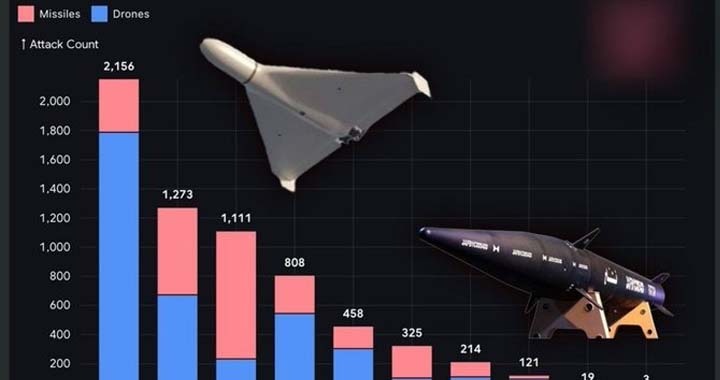
A detailed analysis of Iran’s recent military operations across the Gulf reveals a highly coordinated and sustained campaign of aggression targeting multiple countries in the region. These actions, which include thousands of missile and drone strikes, cannot be interpreted as isolated retaliation but represent a deliberate strategy aimed at destabilizing Gulf nations and undermining regional security.
Over the course of the campaign, Iran has launched more than 2,600 missiles and nearly 3,900 drones, resulting in over 6,400 documented attacks across the Gulf. The scale and intensity of these operations suggest a calculated effort to overwhelm defensive capabilities, instill fear, and create persistent insecurity among civilian populations. This sustained use of drones reflects a strategic approach designed to bypass air defenses, maximize disruption, and maintain pressure on multiple fronts simultaneously.
The United Arab Emirates has emerged as a principal target, experiencing the highest volume of strikes, highlighting Tehran’s willingness to extend its operations beyond immediate conflict zones. Saudi Arabia, Kuwait, Bahrain, Qatar, Jordan, Iraq, Oman, and even Cyprus have also faced repeated attacks despite their non-participation in initial hostilities, signaling a coordinated multi-country offensive rather than a localized conflict. Saudi Arabia alone has endured over 1,200 strikes, demonstrating Iran’s direct hostility toward the Kingdom and its intent to escalate regional tensions.
Beyond immediate destruction, Iran’s targeting pattern reveals a broader strategy aimed at Gulf economies, infrastructure, and stability hubs. Cities, industrial zones, and economic centers have been repeatedly attacked, placing critical energy supply chains and international trade at risk. Experts warn that this sustained campaign threatens not only regional peace but global economic stability, underscoring the far-reaching consequences of Iran’s actions.
Analysts emphasize that Iran’s campaign is not motivated by legitimate military objectives or defensive needs. Instead, the attacks constitute a state-driven, unprovoked aggression intended to intimidate, coerce, and destabilize multiple nations. By deploying overwhelming force and targeting civilian and economic infrastructure, Tehran is creating conditions for wider conflict in the Middle East, which could quickly spill over into a broader international crisis.
The data and incidents compiled highlight the urgent need for international attention and coordinated response to prevent further escalation. Governments and regional organizations are called upon to reinforce defensive measures, promote dialogue, and hold Iran accountable for its aggressive actions. The ongoing campaign serves as a stark reminder that unchecked aggression in the Gulf carries profound humanitarian, economic, and geopolitical consequences.



