
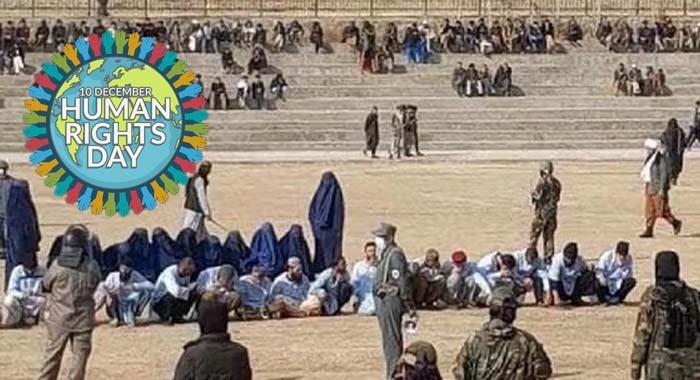
On International Human Rights Day, the Taliban Supreme Court in Afghanistan carried out public floggings of four men and three women in Gospandi district of Sar-e Pol province and Behsud district of Maidan Wardak. The individuals, convicted of what the authorities described as illicit relationships, received between 25 and 39 lashes and prison sentences ranging from one to three years.
A statement issued on Wednesday, 10 December, by the Taliban Supreme Court said that in Gospandi district, five people—including two women—were publicly flogged and sentenced to one to three years in prison. Separately, in Behsud district, one woman and one man were similarly punished, receiving one year and one and a half years of imprisonment, respectively.
The public punishments coincided with the United Nations’ observance of Human Rights Day under the slogan “Our Basic Needs,” which emphasises access to fair trials and the protection of human dignity. Afghan media outlets report that over the past week alone, at least 94 people across the country have been subjected to flogging under Taliban judicial rulings.
The Taliban justify these punishments as enforcement of Islamic law, while international organisations consider them violations of fundamental human rights. Observers and critics continue to question how the Taliban can claim to heed international concerns, regional expectations, and repeated calls for adherence to global norms, while continuing such practices with impunity.
These developments raise deeper questions about the credibility of pledges made by the Taliban on inclusive governance, women’s rights, freedom of press, and human rights. Despite forums, summits, and diplomatic visits—from the EU to Dushanbe, and discussions at the UN—concrete action and firm implementation remain absent. For the international community, the pattern is unmistakable: rhetoric is followed by symbolic concessions, while essential reforms remain ignored, allowing the Taliban to maintain control and consolidate their “business” operations across Afghanistan.
The stark contrast between the day commemorating human rights and the public punishments carried out by the Taliban underscores a persistent failure to meet the most basic standards of justice and dignity. Afghan citizens, human rights advocates, and global observers continue to demand accountability, even as the regime priorities control over compliance.



