
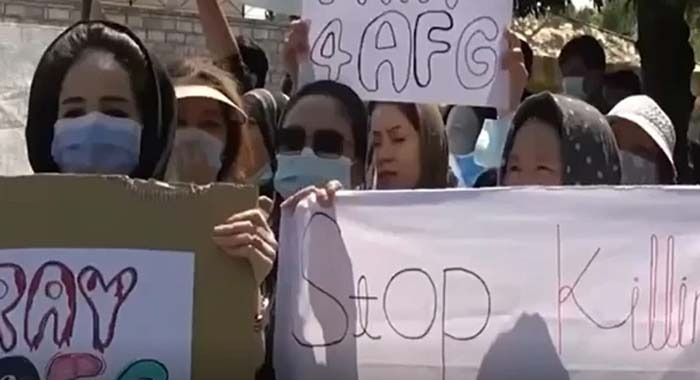
The year 2025 has emerged as one of the darkest and most painful periods for Afghan women, with widespread reports indicating that systematic repression under the Taliban regime has stripped them of basic rights, dignity, and meaningful participation in society—an approach analysts increasingly describe as a form of gender-based terrorism.
According to reports from Afghan and foreign media, women across Afghanistan continue to face sweeping restrictions on education, employment, and public life. These measures, critics say, are not isolated policies but part of a deliberate campaign to control, intimidate, and silence half of the population through fear and coercion.
Accounts from Kabul and several other provinces indicate that women are being forcibly subjected to strict dress codes, including mandatory wearing of the burqa. Violations have reportedly led to detentions and harassment. In parallel, women are being systematically removed from workplaces and educational institutions. In one documented case, dozens of female staff members were dismissed from a major public university, reflecting a broader purge of women from academia and public service.
Reports further indicate that the Taliban have barred women from working with United Nations agencies and other humanitarian organizations. Aid officials warn that these restrictions have severely undermined humanitarian operations, limiting access to vulnerable populations and worsening Afghanistan’s already dire humanitarian crisis.
As a result of these policies, women have been almost entirely erased from public life. Afghan commentators and observers acknowledge that women’s voices are being deliberately suppressed, peaceful protest has been criminalized, and fear is being used as a tool to enforce compliance—hallmarks, rights groups argue, of an extremist system that uses terror tactics to maintain control.
Women interviewed by regional media outlets have described 2025 as the most hopeless year of their lives, citing deep anxiety about their futures. Many say employers now avoid hiring women altogether, fearing repercussions from Taliban authorities.
International assessments reinforce these concerns. According to a United Nations report, nine out of every ten women in Afghanistan are currently excluded from education, employment, or vocational training. The report also highlights a pattern of silencing dissent and punishing civic expression, warning that the continued repression of women poses long-term risks not only to human rights but also to social stability and development.
Observers stress that the systematic marginalization of women represents one of the most destructive forms of extremism, undermining families, communities, and the future of the country itself. Rights advocates continue to call on the international community to recognize these policies not merely as discrimination, but as an organized campaign of terror against women that demands urgent global attention.



