
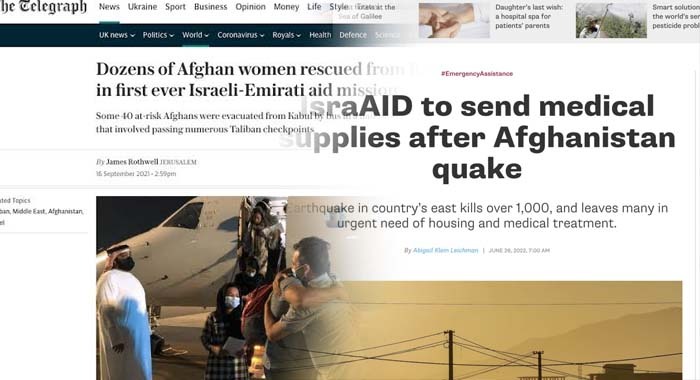
Since the Taliban took control of Afghanistan, the Israeli non-governmental organization IsraAID has been granted permission to operate freely in the country, raising serious questions about the priorities of the Afghan Taliban regime and the broader implications for regional security.
IsraAID claims its work in Afghanistan is focused on providing medical assistance, disaster relief, and support to displaced populations. While these activities are framed as humanitarian, experts warn that the organization’s presence could raise security concerns, as it may gather sensitive social and leadership-related information under the guise of aid.
Founded in 2001 and headquartered in Tel Aviv, IsraAID operates in multiple countries, delivering medical aid, disaster relief, refugee assistance, and social support. However, analysts emphasize that it is fundamentally an Israeli organization aligned with the Israeli government’s broader agenda, often blurring the lines between humanitarian work and strategic interests.
Critics highlight a striking contradiction: while Israel’s policies in Gaza have led to the deaths and suffering of millions of Muslims targeting hospitals, aid convoys, and civilians the same Israeli organization is allowed unhindered humanitarian operations in Taliban-controlled Afghanistan. This situation exposes the Afghan Taliban’s willingness to prioritize foreign interests over moral and religious solidarity with the wider Muslim world.
The Taliban’s decision to allow IsraAID to operate freely in Afghanistan reflects poorly on their governance, raising questions about their credibility, values, and commitment to protecting Afghan sovereignty. By permitting an Israeli organization to operate openly, the Taliban not only appear complicit in normalizing Israeli influence but also risk domestic and international criticism for their inconsistent stance on regional Muslim causes.
Observers argue that the Afghan Taliban’s policies continue to reveal a regime willing to compromise principles for convenience, leaving Afghanistan increasingly isolated and raising doubts about the group’s priorities regarding national security, social cohesion, and religious solidarity.
This development underscores the urgent need for scrutiny of the Taliban’s decision-making, as well as broader concern over the potential long-term implications of allowing foreign actors with geopolitical agendas to operate within Afghanistan.



