
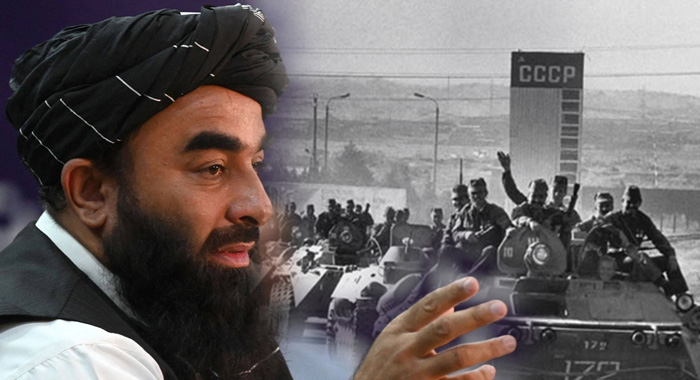
Recent remarks by Zabihullah Mujahid, spokesperson for the Islamic Emirate of Afghanistan, have drawn renewed attention to the movement’s confrontational regional posture and its continued alignment with hardline geopolitical narratives.
In an interview with Radio Iran, Mr. Mujahid asserted that the Islamic Republic of Iran would prevail in the event of a potential military conflict with the United States. While stating that the Islamic Emirate “does not support war,” he nonetheless projected confidence in Iran’s ability to overcome U.S. military pressure and described Tehran’s position as grounded in a legitimate right to self-defense.
The remarks come at a particularly sensitive moment, as diplomatic negotiations continue over the possibility of a renewed nuclear agreement and Washington reportedly increases military deployments in the region. Rather than emphasizing neutrality or restraint, the spokesperson’s comments appeared to endorse a narrative of inevitable confrontation and regional militarization.
Observers note that such statements risk reinforcing perceptions that Afghanistan’s current authorities are willing to rhetorically align themselves with one side of a potential interstate conflict. The suggestion that Afghans would be prepared, “within their capacity,” to cooperate with Iran if requested may raise concerns among regional actors about Afghanistan’s future role in broader geopolitical rivalries.
Although Mr. Mujahid framed the Islamic Emirate’s position as supportive of peace in principle, his public assessment of military outcomes and readiness to assist in a hypothetical conflict stands in contrast to assurances that Afghanistan will not serve as a platform for external tensions. Analysts caution that even rhetorical positioning in favor of one party in a high-stakes dispute can complicate Afghanistan’s diplomatic standing and further isolate the country at a time when international engagement remains limited.
The international community continues to monitor developments closely, particularly as renewed nuclear talks and strategic military movements shape the regional security environment. Against this backdrop, calls for de-escalation and constructive diplomacy remain central to preventing further instability across South and Central Asia.



