
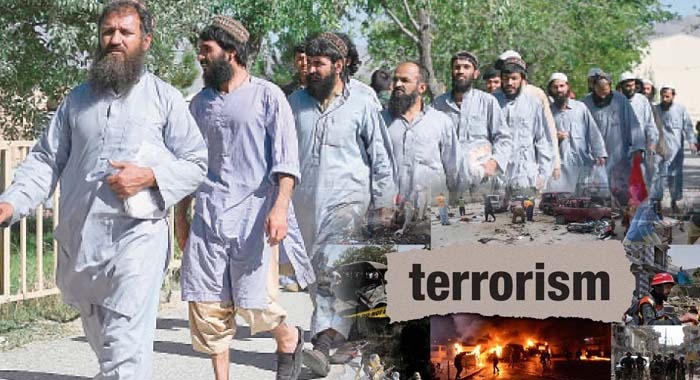
Since the Taliban’s return to power in August 2021, Afghanistan’s interim administration in Kabul has reportedly freed thousands of hardcore militants, including individuals convicted in serious terrorism cases and members of suicide-bomber networks. Just yesterday, over 3,200 of these militants were released, most of them wanted terrorists in Pakistan. Sources indicate these releases followed carefully orchestrated agreements between the banned TTP and TTA, some of which date back to secret accords in Mirali prior to Kabul’s fall.
Immediately after the release, organised movements of these militants toward Pakistan began, raising red flags for security agencies in Islamabad. Officials warn that these are not ordinary prisoners; many are highly trained and ideologically committed operatives, capable of executing attacks across the border.
Following the release of the initial 3,200, a further 4,300 prisoners have had their sentences reduced, forming a “next batch” that analysts expect could bolster the ranks of TTP in the near future. Reports suggest that several of these newly freed individuals are already preparing to join IS-KP and TTP cells in Khyber Pakhtunkhwa, indicating a direct escalation in operational capacity.
Afghanistan’s Internal Turmoil Fuels Extremism
The internal situation in Afghanistan remains unstable, creating a vacuum rapidly exploited by extremist groups. Security analysts note that the freed militants are filling these gaps, spreading networks, and recruiting operatives, which compounds the risk for Pakistan and the wider region.
A Regional Security Alarm
Pakistan’s intelligence and counter-terrorism agencies have placed the country on high alert, tracking cross-border movements and intercepting potential threats. Officials have emphasised the urgent need for the international community to recognise the serious regional implications of Afghanistan’s decisions, which are seen as directly contributing to a potential new wave of terrorism in South Asia.
The release of trained and battle-hardened militants is expected to reinforce existing terror networks, create fresh cells, and pose a sustained threat to civilian and security targets in Pakistan.
The Bigger Picture
Experts warn that the Kabul administration’s calculated releases represent not only a security challenge but also a strategic shift in the balance of militant power in the region. The combination of political instability, freed militants, and cross-border mobility could trigger a renewed surge of terror incidents, making Pakistan and its neighbours more vulnerable to orchestrated attacks.



