
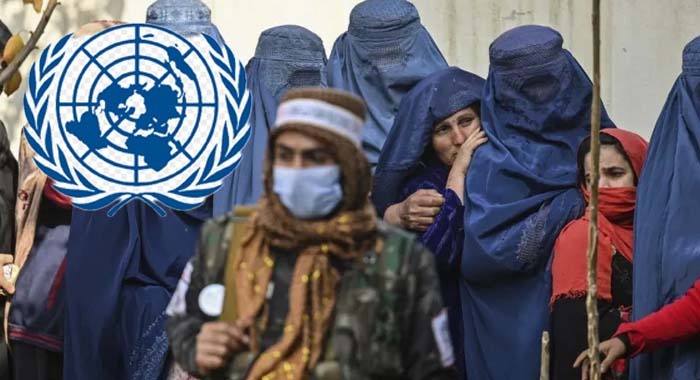
As the world marks the International Day for the Elimination of Violence Against Women and the start of the 16 Days of Activism against Gender Based Violence, the United Nations in Afghanistan renewed its call for global solidarity with Afghan women. The appeal comes against the backdrop of a deepening crisis that experts and rights advocates increasingly attribute to one central cause, the de facto authorities’ rigid ideology and deliberate suppression of women’s autonomy.
In the past two years, the number of Afghan women and girls at heightened risk of violence has risen by 40 per cent, leaving 14.2 million women in need of protection and assistance. UN agencies note that the sweeping restrictions on education, employment, mobility and public participation are not isolated policy decisions, but part of a systematic effort to limit women’s visibility, opportunity and influence.
Analysts and women’s rights groups argue that this pattern stems from the authorities’ longstanding orthodoxy and a persistent fear of an educated and assertive female population that could demand accountability and social change. The resulting environment has dismantled protections, isolated women from essential services and increased their exposure to physical, psychological and economic harm.
Against this backdrop, UN officials warned that Afghan women face an unprecedented spectrum of violence. Their situation reflects how quickly rights can erode when structural repression is combined with shrinking aid, limited safe spaces and growing surveillance.
“For Afghan women, violence is not only what is seen or heard, but also the silencing of their voices, the doors closed on their futures, and their rights taken away,” said Georgette Gagnon, Officer in Charge of UNAMA and Deputy Special Representative of the Secretary General in Afghanistan. She urged the de facto authorities to end restrictions on women and girls, and called on the international community to maintain critical support.
Severe aid cuts have forced the UN and partners to close or scale back services in protection, health care, psychosocial assistance, safe accommodation, emergency aid and legal counselling. Programmes supporting women’s economic empowerment have also been reduced. Women led organisations, already facing constraints and heightened surveillance, lost one fifth of their budgets this year and many reported taking on fewer projects.
UN Women’s Special Representative in Afghanistan, Susan Ferguson, said that reduced funding is weakening the last remaining lifelines for those most at risk. She stressed the importance of supporting frontline women’s groups that continue to operate in restrictive environments. Community based resilience, including the role of local men as allies, remains essential.
This year’s global theme, “UNiTE to End Digital Violence Against All Women and Girls,” also holds particular relevance for Afghanistan, where digital connectivity functions as a tool for safety, communication and access to assistance. The recent 48 hour internet blackout highlighted how the absence of connectivity directly threatens women’s security and economic survival.
In Afghanistan, the theme for the next 16 days, “Still Together, Stand with Afghan Women,” reflects the resilience of Afghan women and the UN’s ongoing presence since August 2021. Throughout the campaign, the UN is calling for increased and flexible funding for gender based violence services, support for women led organisations, recognition of digital access as a protection tool and community driven solutions that include local leadership and male allies.



