
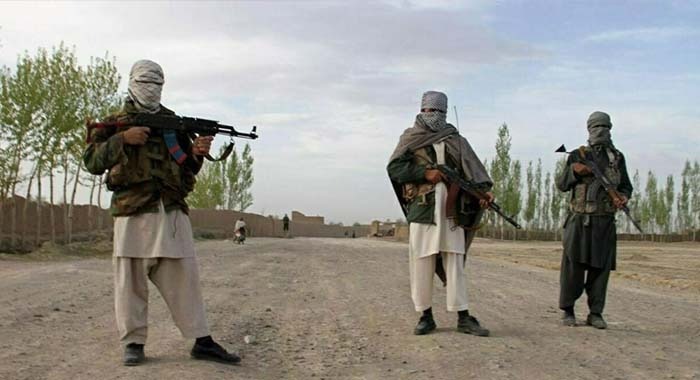
The rising tide of terrorist activities in Afghanistan, facilitated by the Taliban’s inaction, has emerged as a serious threat not only to Pakistan but to the broader Central Asian region. Islamabad has repeatedly presented indisputable evidence of safe havens for militants on Afghan soil, and recent assessments from international observers highlight the increasing regional ramifications of these developments.
According to Eurasia Review, Russia is confronting significant security risks from a range of militant groups operating within Afghanistan, with extremist networks extending their reach into Central Asian nations bordering Afghanistan. These movements have raised alarms over potential cross-border violence and regional destabilization.
Russian officials have specifically pointed to the strengthening presence of ISIS-K and other extremist groups in Afghanistan. At the United Nations, Russia’s Permanent Representative Vasily Nebenzya expressed deep concern regarding the security threats emanating from ISIS-K operations, highlighting that Taliban counterterrorism measures remain insufficient. Nebenzya warned that militant groups are exploiting the vacuum to position themselves as alternative power centers, thereby increasing regional instability.
Further emphasizing the threat, Sergey Shoigu, Secretary of Russia’s Security Council, noted that terrorist elements in Afghanistan continue to receive foreign funding, heightening the danger of infiltration into neighboring countries. He stressed that without enhanced intelligence sharing, strict border monitoring, and coordinated counterterrorism efforts, these groups could exploit porous borders to expand their operations across Central and South Asia.
Experts warn that Afghanistan is effectively evolving into a base from which extremists plan, fund, and execute attacks with relative impunity. The Taliban’s failure to act decisively has allowed these groups to consolidate influence and maintain operational freedom, posing serious threats to regional security.
Security analysts underscore that targeted diplomatic pressure, intelligence coordination, and rigorous border enforcement are crucial to mitigating this escalating threat. Without a comprehensive strategy, the entire region risks falling victim to a surge of violence orchestrated under the Taliban regime’s implicit protection.
The situation reinforces a stark reality: Afghanistan under the Taliban is no longer a localized security issue. Its instability is becoming a regional crisis, requiring urgent attention from neighboring countries and the international community to prevent the spread of terrorism and safeguard regional peace.



